
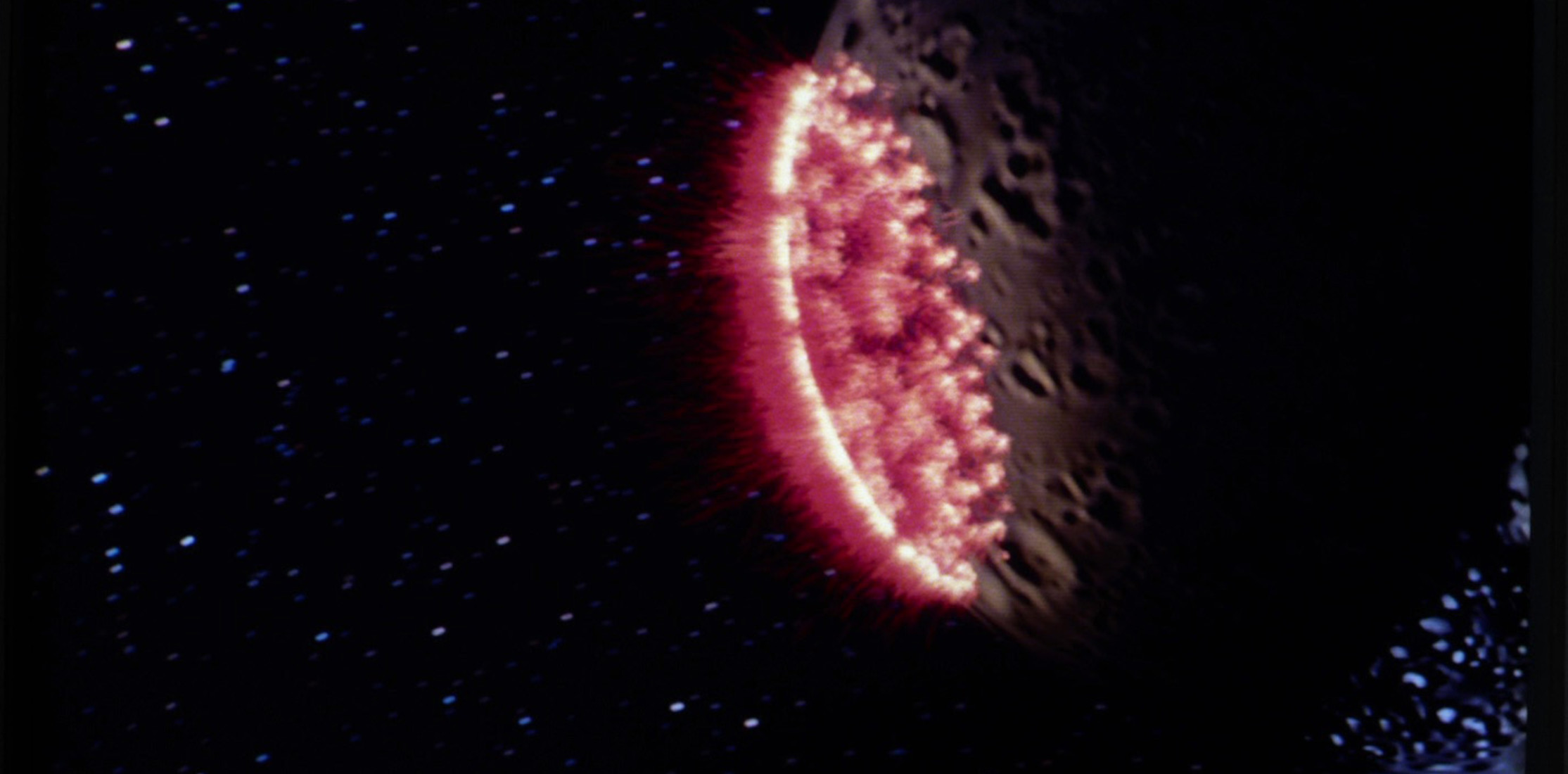


The coming of a new year always comes with a feeling of new beginnings. Whether it’s hearing the bells at midnight or planning a list of new years resolutions to forget about by February, the changing of numbers and another year ahead can bring us a sense of starting over. To commemorate another year passing, and the beginning of a new Star Trek milestone, we’re kicking off with our usual list looking at five times Star Trek itself was able to give itself a fresh start.
GROWING THE BEARD
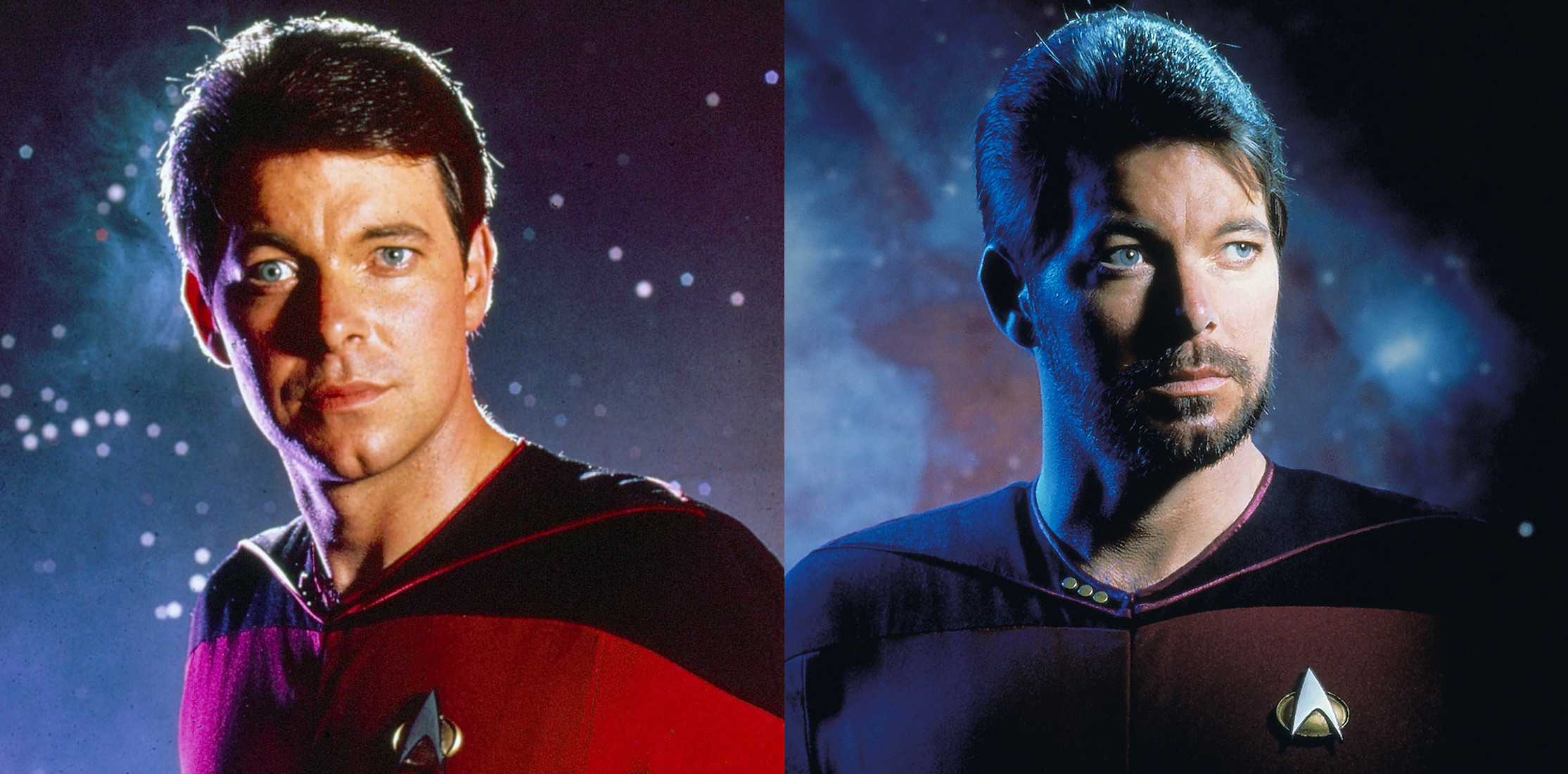
Between the first and second seasons of The Next Generation, things changed. A lot. A lot of the Next Generation was just carrying over from the abandoned Phase II and Roddenberry’s constant rewrites led to a very inconsistent start for the show. By the second season things has calmed down a little bit and after finding their feet, and with slightly less backstage chaos, the show came into it’s own, delivering episodes like Measure of a Man and thankfully never going back to the embarrassment of Angel One or Code of Honour.
Something else changes between seasons, though. Commander Riker’s striking young look was now hidden behind a beard. Later on Riker would say it was an intentional change to build a more mature presence. In reality, Jonathon Frakes just grew a beard and everyone went with it. Yet for all that changed in the shows production ahead of season 2, the beard was given credit for the massive jump in quality and now, decades later, is still the go-to term no matter the genre for a TV show that survives a poor first season to find success later on.
STARFLEET IS A PROMISE
Discovery as a show was filled with firsts. It was the first show to have a lead star that wasn’t in charge, the first to begin without it’s leading ship and of course the first F Bomb among much more. But it was also a show about reinvention…
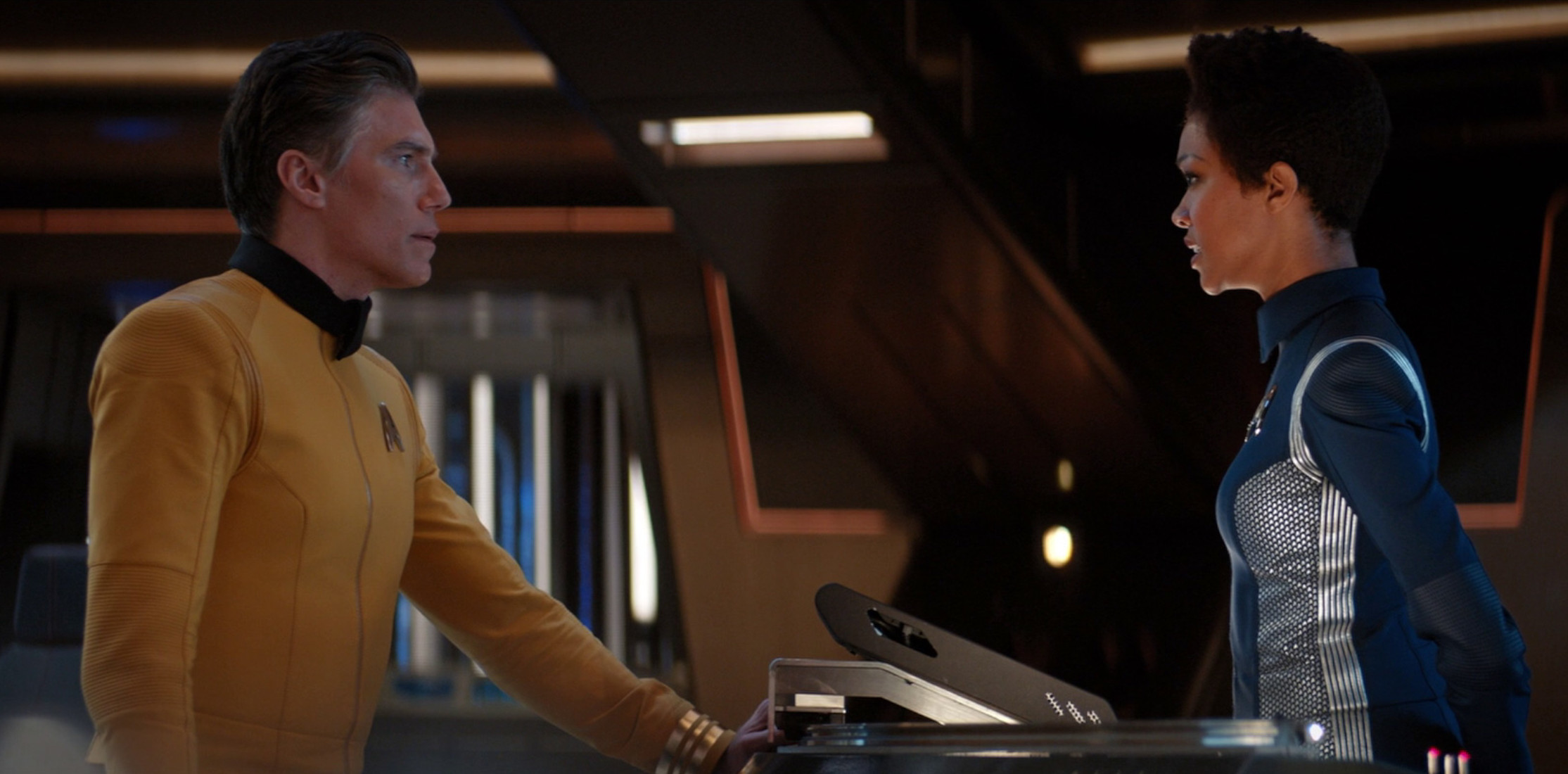
Leading the USS Discovery, Captain Lorca always seemed a bit off. A damaged and calculating Captain with a more tactical mindset than most. Oh, and also turned out to be a Terran imposter using the scientific mission to cross back into his universe and overthrow the Empire. The effects of Lorca’s style and eventual betrayal were summed up with Saru rallying the crew at the end of the season, but it wasn’t until the second that the crew had a Captain who could inspire more than intimidate.
Instantly changing the tone, a brash and confident Captain Pike pushed to focus on everyones skill, knowledge and strength as a collective turning Burnham, Saru and the rest of Discovery from on-edge tension by the design of their former captain, to inspired rising stars ready to walk a remarkable journey together.
THE TONE OF KHAN
Captivating a growing audience with it’s over the top style and bright colour palettes, the original series was reimagined with a stylised neutral tone in the Motion Picture that never quite lived up to the iconic style of the 60’s. Normally that means you pivot from the beige back to the bold colour choices. Yet for the Wrath of Kahn, the style of Star Trek took an even more dramatic shift…
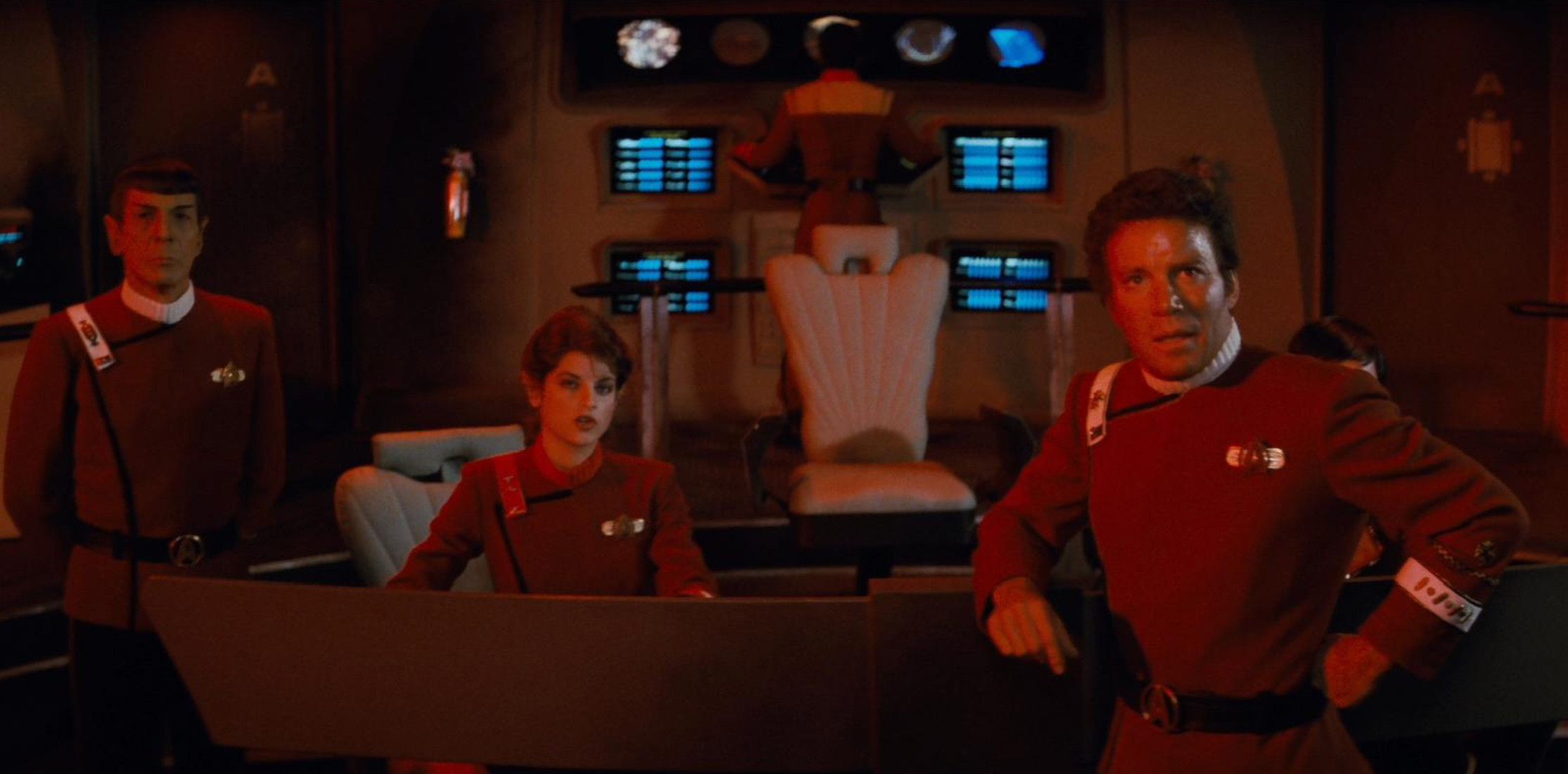
Giving up the bright white sets for a darker tone and tighter framing, the Enterprise went from a feeling of spacious comfort to claustrophobic submarine style to mirror the change in it’s character traits; Kirk was past his prime with his past coming back to haunt him, giving the story a more grounded feeling along with the style changes.
The biggest change though were the uniforms; a massive departure from the originals, the uniforms were now formal and militarised with inspiration from ancient naval looks instead of 60’s futurism. While the look became iconic, the characters became even more so focusing on friendship, personal struggles and growth and more grounded conflicts with both personal stakes and more personal consequences – a move that helped to redefine and extend the Star Trek name for new generations.
VOYAGER AND THE BORG
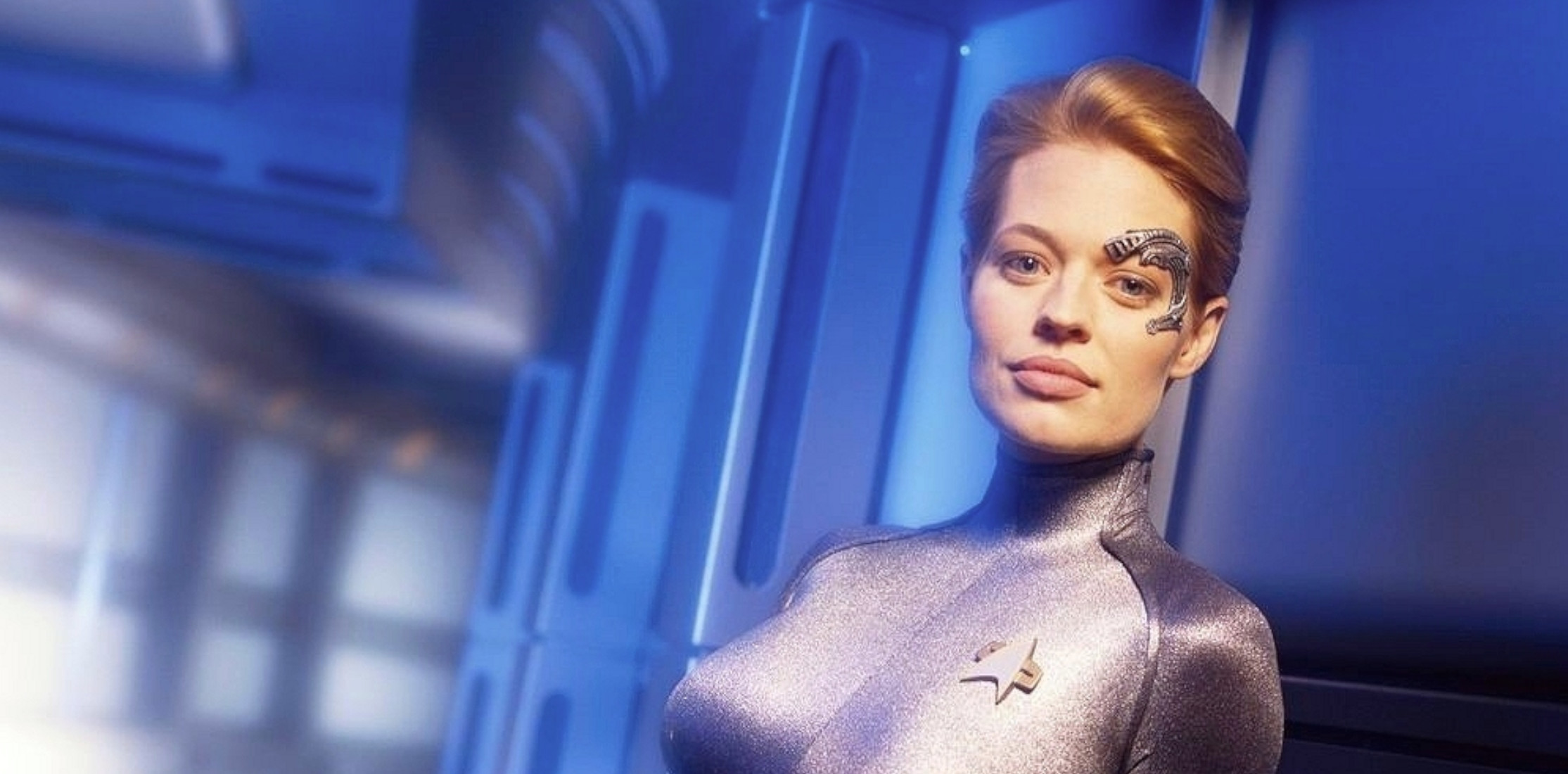
Part of Star Trek’s formula has often focused on the outsider. Spock, the rational alien. Data the naïve android who can’t quite grasp humanity (at first). Even Deep Space Nine had it’s Odo and Enterprise it’s own iteration of the Vulcan trope in T’Pol. Voyager had it’s stand in’s, but they never quite fit the mould until Seven of Nine changed the cast dynamic.
Often overlooked for the obvious Berman-era sex appeal, Seven’s impact on Voyager went well beyond the catsuit. She was the missing ingredient. Assimilated as a child, Seven’s knowledge of humanity was largely what came from a shared database. After being a mindless drone for most of her life, her story of reintegrating and learning what it was to be both human and part of a community was key to changing and humanising the show after her arrival.
Seven was smart and capable in being the de facto science officer, but her lack of understanding on social dynamics or seeing the bigger picture – combined with her severe inability to be anything but blunt and direct – would often put her at odds with Janeway, challenging the Captain in ways no one else could. The conflicts added to her re-learning of what it was to be human, sometimes having to learn when to walk away, and sometimes having to put a mirror up to the biases of others, helping to create a fascinating character that enriched the show with a lasting legacy.

THE WAY OF THE WARRIOR
Considered the odd one out when it was first launched, Deep Space Nine has over time been regarded as one of the franchise’s best entries thanks to it’s leaning towards more serialised story telling and a growing list of interesting characters who change and grow throughout the series. But while a lot of the foundation was laid in earlier seasons, it wasn’t until the fourth that the show escaped the Next Generations shadow and was given new life with a new arrival.
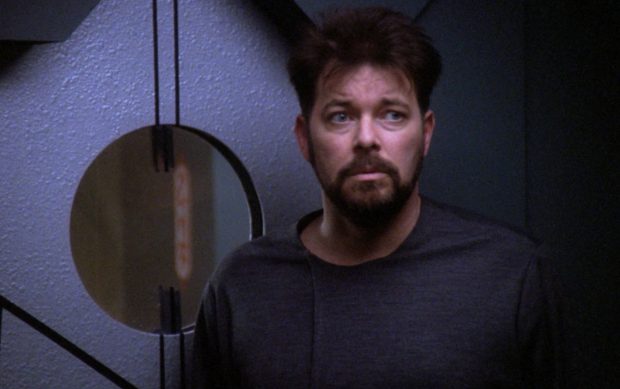
In Way of the Warrior we see Captain Sisko embrace the bald as he prepares for an inevitable conflict with the Dominion and a new Klingon problem as Gowron decides to get involved under the belief that Cardassia’s already been infiltrated. To help guide them forward, Sisko calls for Word, now out of a job thanks to the destruction of the Enterprise and mirroring Sisko’s journey in the early days as he’s looking to leave Starfleet.
Bringing in the Klingons was a bit of a side step to the Dominion plans, but it worked. With Worf joining the cast and bringing the political chaos of the Empire with him, the show found a new beginning as it mixed familiar foes with DS9’s already messy backdrop and helped push the show into a more action-centric set of plotlines that would increase the stakes, the drama and the quality of the show to all new levels thanks to lead producer Ira Stephen Behr realising that with TNG over and Voyager far from home, the Federation was their playground now and they could start to show the ugly side to the utopian vision…
It’s reinvention has always been seen as a second pilot and helped escalate DS9 to becoming a huge influence on future generations that brought a true sense of reality to the otherworldly conflicts of the final frontier.


About the author

A Fistful of Spooky Encounters
Since it's inception Star Trek hasn't just been a sci fi show, but a show that used it's science fiction setting to tell a variety of stories from a large pool of themes and styles. And since we're officially in 'Spooky Season' on the countdown to Halloween, why not take a look at some of Star Trek's best dives into darkness? EMPOK NOR DEEP SPACE NINE, SEASON 5 Deep Space Nine is falling apart and thanks to the war, O'Brien can't exactly ask the Cardassians for spare parts. But he has a plan. Along with Nog and Garak, O'Brien leads an engineering crew to another abandoned Cardassian station to salvage what they can. Only problem is... there's a reason it was abandoned... Possibly the most straight forward horror story in the series, Empok Nor was host to an experiment gone […]
Delta Quarter Promotions & Citations: September 2026
Throughout it’s entire existence SFC has grown, evolved and thrived due to the commitment and passion of our officers and crew. Keen members can make a huge difference within their unit or the fleet as a whole, and we like to ensure members are rewarded and recognised for all they bring to the organisation. Starting this year, we're opening every new period within the fleet celebrating those who have made an impact and engaged in being a positive influence in their unit or in Q2 overall. And while we're getting in a little bit earlier, we'd like to introduce our Delta Quarter awards. While promotion is one of the most visible awards available to members, one of the most vital are our commendations. Commendations are a formal recognition awarded to members of Quadrant 2 who have shown commendable service and […]
Wibbly Wobbly, Timey Wimey: ‘Tomorrows Enterprise’, Strange New Worlds S4E10
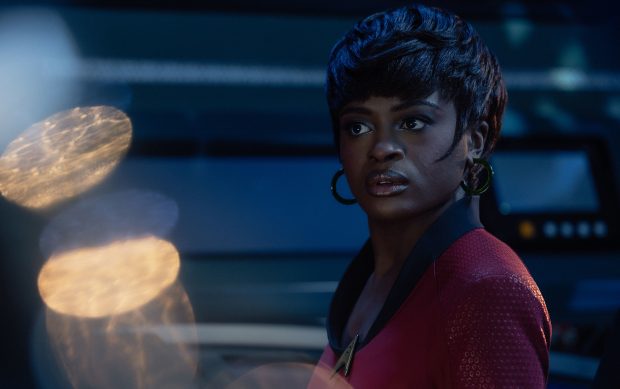
Focusing on two timelines, Tomorrows Enterprise leads with Uhura of the present linked to her future as the two work together, manipulating the timeline to their advantage to solve the mystery of an undecipherable alien message, and a certain Scottish engineer who seems to have vanished from the timeline in the future... Writers: Henry Alonso Myers & Robbie Thompson. Director: Chris Fisher. In the present, there's some weirdness for Pike's Enterprise as they investigate a White Hole thats giving off some weird signals and an energy pulse that causes a temporal shift that directly effects Uhura after she hears strange sounds over comms. As she begins to hear things, such as Scotty screaming for help, her future self is going through some oddities of her own. A year in the future, the Enterprise is on the other side of […]
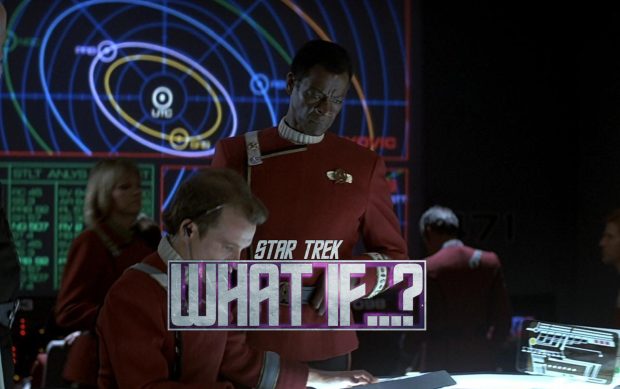
What If…. the Whales Were Never Extinct?
Fondly remembered as the lightest, more comedic entries in Star Trek's film offerings, The Voyage Home is the story of an alien probe coming to Earth to talk to it's whale pen pal, a little bit miffed that they've not had a letter in a while. In the 21st century, those pen pals – Humpback Whales – had been hunted to extinction. Meanwhile, Kirk and his disgraced crew were on the way home to stand trial and through some time warp shenanigans, take a stolen Bird of Prey back to the 20th century, kidnap some whales, and take them to the 23rd century to save the day. The charges against Kirk were a fairly big deal. Previously Kirk had stolen a soon to be retired Enterprise, went against orders and along with support from his long standing command crew barged […]
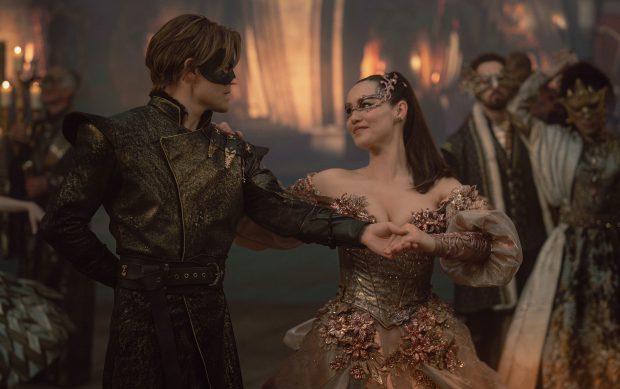
It’s a Kind of Magic: ‘Once La’an A Time’, Strange New Worlds S4E09
Developed by an alien tapping into the mind of M'Benga's daughter, turning reality into her favourite book, the Elysium Kingdom is now more reality than fantasy. Having morphed from a surreal experience to a flat-Earth like planet replica floating through space, the Elysium Kingdom lives on with it's evil queen continuing dream up new schemes. But the Kingdom's purpose has shifted with it arriving to unsubtly help one of the Enterprise crew... Writers: Onitra JohnsonDirector: Sydney Freeland Not quite by chance, the Enterprise runs into the 'unknown flat planet', a disc-shaped world moving through space with it's own power, air and life. Beaming down, Pike, Spock, Pelia and La'an find themselves in a fairy tale world. Complete with real fairies. And a fairy castle. After running into King Ridley, the part played by M'Benga in the season one episode, they […]
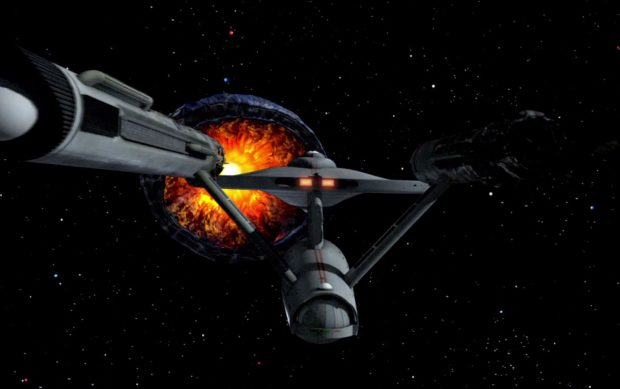
[Retro Review] The Doomsday Machine
Responding to a distress call from the USS Constellation, the Enterprise race to the rescue but they arrive too late to save the day. Coming under fire from an alien entity, the Constellation has been heavily damaged and with only one survivor within it's charred shell; Commodore Matt Decker... Still in shock from the attack, Decker isn't able to say if it was an alien ship, or a creature that tore his ship apart. It doesn't take long to track the aliens flight path. It's not from around these parts, entering the Galaxy and on course towards populated areas that would undoubtedly be next in it's devastating path. Beaming on board with an away team, Kirk aims to try and get whats left of the ship back up and running while getting Decker to safety. But during the transit, the […]
Related
A Fistful of Spooky Encounters
Since it's inception Star Trek hasn't just been a sci fi show, but a show that used it's science fiction setting to tell a variety of stories from a large pool of themes and styles. And since we're officially in 'Spooky Season' on the countdown to Halloween, why not take a look at some of Star Trek's best dives into darkness? EMPOK NOR DEEP SPACE NINE, SEASON 5 Deep Space Nine is falling apart and thanks to the war, O'Brien can't exactly ask the Cardassians for spare parts. But he has a plan. Along with Nog and Garak, O'Brien leads an engineering crew to another abandoned Cardassian station to salvage what they can. Only problem is... there's a reason it was abandoned... Possibly the most straight forward horror story in the series, Empok Nor was host to an experiment gone […]
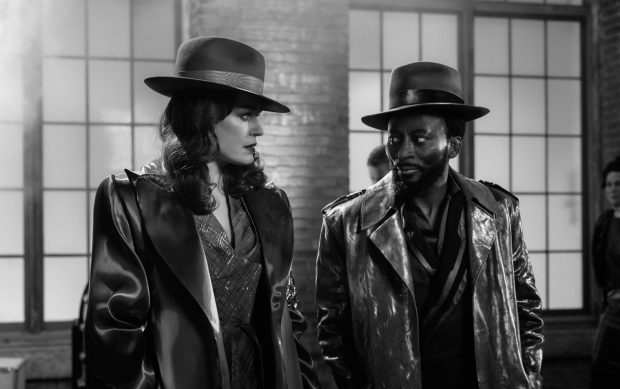
A Fistful of Undercover Operations
Occasionally when exploring the wonders of deep space, our heroes of Trek have been summoned to - or by sheer accident - become another person to fulfil their mission. Whether it's O'Brien mixing with gangsters or Picard becoming a mercenary, Star Trek's filled with episodes where our favourite explorers have to become someone else to save the day.... FACE OF THE ENEMY The Next Generation Season 6 Waking up on the Warbird Khazara, Deanna Troi finds herself in a bit of a pickle. Kidnapped and surgically altered to take the place of a Tal Shiar Commander she finds herself led by her handler, N'Vek, to lead a secret mission after the Commander had been killed. Out of her comfort zone, Troi has to convince the crew she's the real deal despite the ships skipper knowing something's not quite right.... In […]
A Fistful of Down To Earth Adventures
Warping through the stars always searching for the next adventure, it's rare that Star Trek ever comes home to Earth. Through all the series, and highlighted in Enterprise, the third rock from our sun is kinda important in the grand scheme of things but our eyes are always far beyond the stars. So for no particular reason at all - certainly not any recent new series launching - we're taking a look at Trek's more Earthbound moments.... Homefront/Paradise Lost Deep Space Nine Season 4 The Founders said they were everywhere. Now we know they're on Earth. Recordings revealed a founder during the bombing of a Federation meeting on the home-world and Sisko is recalled. His knowledge and experience with the Dominion is vital to securing Earth against the inevitable war. But while the Dominion may be the enemy, they aren't […]
A Fistful of ‘Spirk’
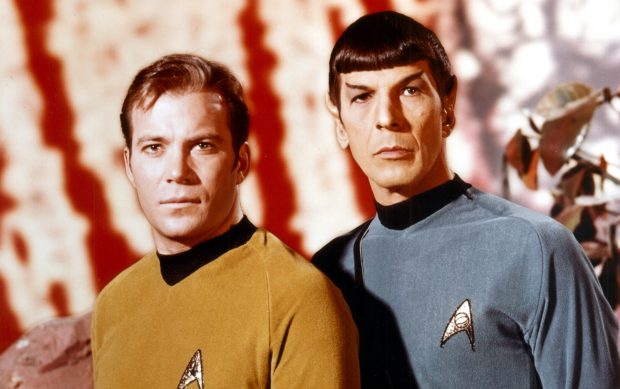
We've been spoiled with Spock in the past few years with Discovery introducing a younger iteration of the character long before he became the refined man of logic that made him famous, and continued that story through Strange New Worlds and his time under Captain Pike's command. As Strange New Worlds continues, giving more history to the original series line up and the early meetings of Spock and Kirk as it makes way for the beginning of the Kirk era, we thought we'd look back at some moments that made the partnership one of the most popular combinations in science fiction. JOURNEY TO BABEL TOS Season 2 Spock's got a bit of an issue with sharing. Secret brother who was shunned. Secret sister who's fate was classified. And despite trusting the Enterprise crew with his life, it was clearly only […]

A Fistful of O’Brien
Entering the Star Trek world as an unnamed extra with a few bits of dialogue, O'Brien soon became a fixture on the Enterprise D as it's transporter chief before moving to Deep Space Nine to head up engineering and operations on what was thought to be a backwater outpost before it became one of the most strategically important stations in the quadrant!As the only enlisted or non commissioned officer to feature in the main cast of any Star Trek show to date, O'Brien stands as the only working class hero in the Star Trek universe with a vast and varied career taking from the front lines of the Cardassian war as a soldier, to the front lines of the Dominion War as an engineer, retrofitting DS9, keeping the Defiant from blowing itself apart, and even sniping Dominion troops. All in […]

A Fistful of Justice
Although it's one of the worlds most legendary science fiction shows, Star Trek has always dabbled with format and genre's, all dressed up behind deep space adventures. Whether using the holodeck for a touch of fantasy, or diving into the horrors of war through Deep Space Nine's run, the variety of story telling never seems to fit one mould. But out of all the different tales told in the wonderful world of Starfleet, one that always promises to deliver is the court room drama. This month we're diving into the most captivating of Star Trek's courtroom drama's with a Fistful of Justice! AD ASTRA PER ASPERA Strange New Worlds, Season 2 One of the most modern examples of Strar Trek's court room drama saw Pike's own Number One, Una-Chin Reilly, under court martial for a serious breach of Starfleet regulation […]

