


The first alien species to openly make contact with Earth and one of the core members of what would become the Federation, Vulcan’s started with the original series Spock just to show the alien on the bridge. Now, nearly sixty years later, Leonard Nimoy’s portrayal set the tone for decades of evolution. Despite being an easy mine for comedy, seen quite a bit in Strange New Worlds between the ‘lets mess with Spock’ episodes and now Four and a Half Vulcans bringing a full on comedic parody of Vulcan stereotypes, the nuance and layers thrown into the mix over time can be surprising and sometimes even heart-warming. So this time we’re looking back at the episodes that go beyond the stereotypical logic and delve a little deeper into the culture of Vulcan.

Sarek, The Next Generation
Sarek was introduced as the ultimate Vulcan, but over the years despite very few appearances, we saw the depth of what lay underneath the hardened shell of logic. Not even pleading Kirk to save Spock’s soul was as heart-breaking as seeing everything Sarek lived for crumble away due to illness and age in his final years.
Breaking down on his final mission, and barely patched together by his entourage, Sarek boarded the Enterprise-D with his grip on logic loosening. A mind meld with Picard allowed him balance to complete his mission, but it was a temporary fix that left Picard haunted by a life of regret, pain and misery to uphold the illusion, revealing the true depths of Vulcan emotion and the struggle to contain it all under the cold surface.
Carbon Creek, Enterprise
On April 5th 2063, Zephran Cochrane’s warp flight gets the attention of the Vulcans who, upon seeing this feat, make first contact with Earth. Or so history says. T’Pol knows better. During a Captains dinner, T’Pol tells the tale of her grandmother, who lived on Earth after being stranded in the 1950’s with her team and would end up integration into a small rural American town.
In a weird way Carbon Creek does something absolutely no other series has touched on before in Vulcan stories. Friendship. The three Vulcans were colleagues in a tough spot, but this was the only time we see a group of Vulcans socialise with each other in a non professional setting and really delve into what drives them. And the idea of a Vulcan stunned by the barriers to good education and a balanced life having such a large ripple effect showed more in 45 minutes than anything we’d seen to that point.

Lethe, Discovery
Often Discovery gets mentioned for placing Michael Burnham into Spock’s personal history. Creatively though it wasn’t Spock the show was capitalising on, it was his father, Sarek. Sarek has been an oddly emotional thread throughout Star Trek history considering he shunned his half human son, and while the prequel did give insight to that, Lethe was one of the episodes that showed there was a lot more to mine from the man who died filled with regret.
In Lethe we see Burnham save her adoptive father by means of a technological meld mind (of sorts) and break into his memories and show the complexity of who he was; on one hand he was a complete monster who saw his children as little more than experiments. On the other, we see him struggle with the choice of favouring his second born son or his adoptive daughter and the consequences of his failed attempts at integrating humans within Vulcan society. It’s a heartbreaking story that adds more depth, and in a way more darkness, to the ultimate Vulcan.
Innocence, Voyager
For decades the idea of what a Vulcan was came from Spock, a half Vulcan struggling with the balance between logic and emotion. He was seen as an oddity to his people. By the time we had another Vulcan on the regular cast, Tuvok lived up to the popular idea of Vulcans being cold and emotionless, but with a more open and mature outlook that showed he may have control over emotion, but they’re every bit as capable of the emotions Spock would deny.
While not an episode that would rank in the series top ten, Innocence ended up being one of the best examples of the Vulcan perspective. After running into a bunch of kids walking their way to a death sentence, Tuvok takes charge and begins to look after them in a typically Vulcan way. That Vulcan way is of course stoic and cold, but Tim Russ has a wonderful way of being the serious parent in such a way that shows underneath the logic is an empathy and compassion that can’t be denies no matter how hard you push back those emotions.

Amok Time, Original Series.
Possibly the most parodied episode of Star Trek ever created, Amok Time is remembered fondly for the showdown between Kirk and Spock with the now iconic score in the background as the ancient Vulcan ritual plays out to the death. Replicated in everything from Dexters Lab to The Cable Guy – and even getting a bit of a self parody revival in a Strange New Worlds dream sequence – the fight scene overshadows some of the larger additions to the Vulcan culture that would carry through multiple era’s of Star Trek.
Spock has to go home for a bit of upsy downsy with his wife. It’s a biological Vulcan law as he’s entered Pon Farr – or mating season, really – and has a wife to be awaiting for him to stop messing about in space and get on with it. The whole premise itself opened up the concept of how the emotionally repressed people handled love and relationships. Mostly by obligation and logical planning. But it also gave a lot more.
For the first time we get to see Vulcan and everything really opens up. The logical bookworms planet is seeped in ritualistic culture that hints at logic not just being a way of life, but an entire cultural identity that embraces traditions to guide and dictate them. From the desert world to the shiny gongs, everything that would define Vulcan came from Amok Time, making it one of the most important stories in Trek history thanks to it’s new perspective in showing us a fascinating peek behind the demeanour of the Enterprise science officer.


About the author
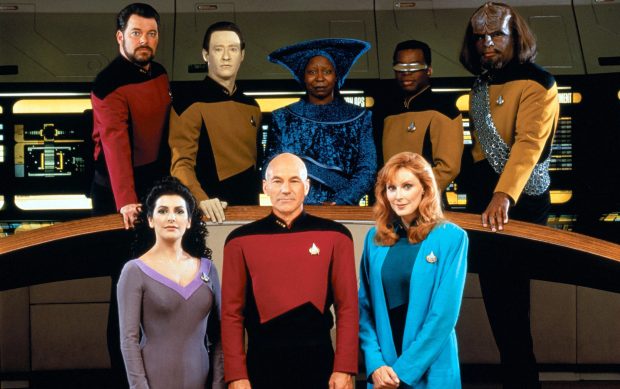
[For The Uniform] Generational Upgrade: 2350’s-2370’s
After solidifying a formal military style with stiff dark reds and heavy duty fabrics through the latter half of the 23rd century, the 'Monster Maroons' defined Starfleet as a more serious, more robust organisation. With minor tweaks the look stayed strong for almost 80 years when suddenly Starfleet decided they needed a dramatic change. It's not uncommon. Starfleet goes through uniforms faster, and in more rapid evolutions than any other organisation in history.Maybe it's because of the constant evolution of the Federation? Bringing in new members, new styles, new sensibilities and adapting to their needs. Maybe the MonsterMaroonians joined the Federation and would only absorb their navies into Starfleet if they adapted to their style, and it took eighty years for another species to come in and make fashion related demands. Maybe a new Admiral became Commander in Chief and […]
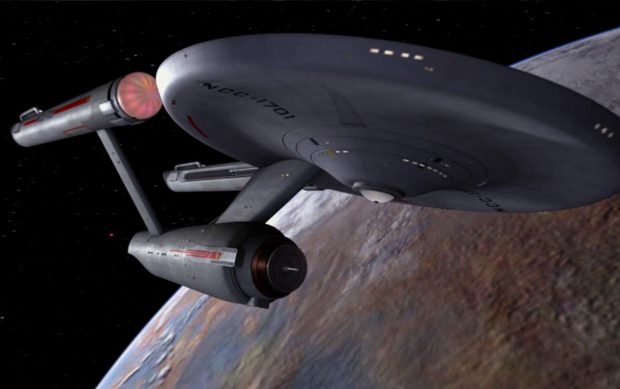
[Treknology] Clearing The Way: The Deflector
Over the decades the technologies of Star Trek have become so popularised and well known that even someone who's never seen an episode knows what a phaser is, or that warp drive goes really, really fast. Even if someone couldn't tell you what a transporter does, “Beam Me Up” is still a phrase you can say and people will just know what it means.But when you look at ships like the Enterprise, there's one big feature built into every design since that might not be as well known as the saucer, the bridge or the glowing warp nacelles, but is one of the most vital parts of any and all starships flying from planet to planet. When you think of space, you imagine this big empty void of nothingness. But while there is a huge expanse of distance between locations […]
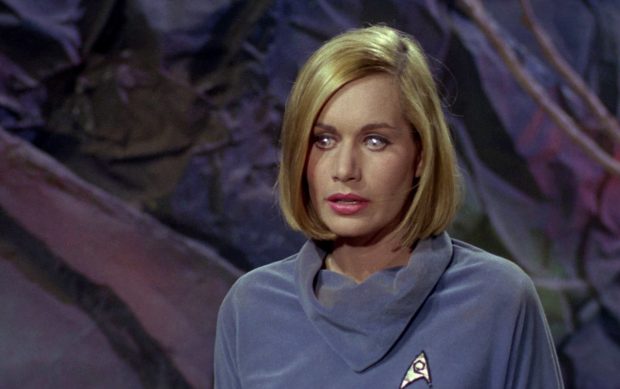
Them From That Thing: Sally Kellerman
Building an eclectic career with over sixty years in film, television, music and theatre, Sally Kellerman is fondly remembered by a whole generation as the original Hotlips Houlihan in the film adaption of MASH. Her part in the world of Star Trek helped introduce the world to the little sci fi show that began it's own franchise of entertainment. Starting her acting career in the late 50's after turning down a contract with Verve Records, Kellerman was a familiar face on television by the time Star Trek came around. With appearances on Bonanza, The Alfred Hitchcock Hour and the Twilight Zone among others, Kellerman was able to gain a wide range of experience that helped establish an adaptability that would carry her career forward in playing anything from a glamorous and sophisticated character, to intense and eccentric parts. Kellerman’s appearance […]
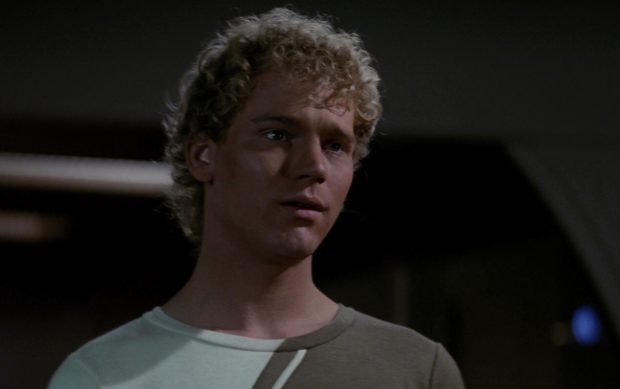
Who is David Marcus?
While the original series brought the idea of Star Trek to life, it's film sequels did a lot to flesh out and develop the characters in the next era of their life, with new characters coming on board the Enterprise to both challenge the leading crew and give us a new perspective of the world saving heroes of the Federation. One of the most impactful appeared in only two of the six films, but left a lasting impression on Captain James T Kirk... Working with his mother Carol, David Marcus was one of the lead scientists on the Genesis project. Based on a remote space station, David's part in the project was both what helped it succeed, as well as cause it's downfall. Genesis was an experimental, and highly secret, project to terraform barren planets and manufacture life. While Starfleet […]
Across The Universe And Back To Strange New Worlds!
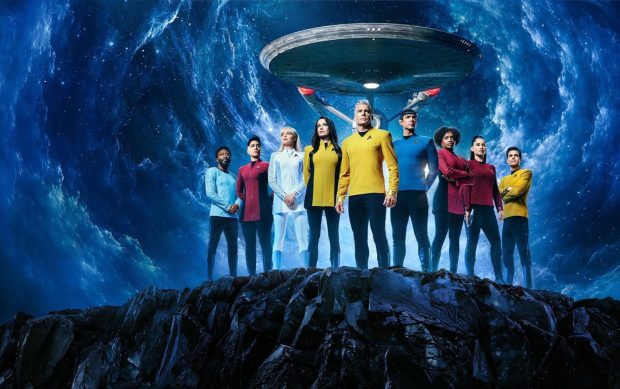
Time has certainly flown by as Strange New Worlds penultimate season is just days away. Things have been a little guarded since the show was announced to be ending with a shortened 5th season, but it gave the production plenty of warning to wrap things up and bring an end to the original Captain and his crew! With some cast announcements for Season 5 seeing new additions including Thomas Jane as Leonard McCoy, as well as knowing it'll a shorter season to bring the show to a close, the fourth instalment feels a little bittersweet. But from recent hype from Paramount, we might just be in for a fun time. Season 4 Episode Titles Ahead of the series launch, the Star Trek social media team have been hard at work with some teases including short clips of each of the […]
Behind the Viewscreen: Jerry Goldsmith
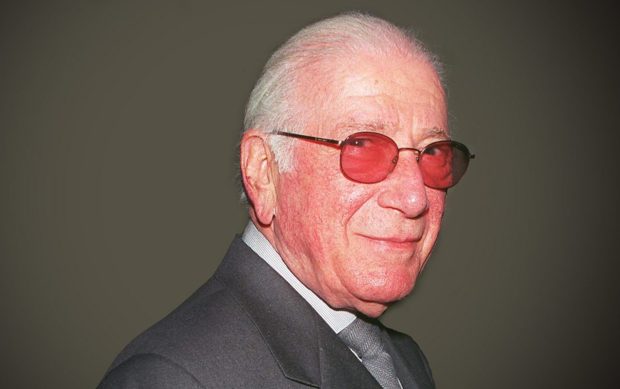
Across a long career writing music for some of Hollywoods most celebrated films, Jerry Goldsmith's mark can be heard in a huge range of genre's from The Omen, to LA Confidential, from Patton to Planet of the Apes. But even when it comes to his science fiction scores including Alien and Total Recall, none have left as iconic a mark as his contributions to Star Trek. During the reinvention of Star Trek for cinema, director Robert Wise knew the challenge. Turn a small sci fi show into a cinematic epic. The success of that has often came up for debate, but no matter the opinion on the Motion Picture, the one celebrated element was the music Goldsmith delivered and the new template he build for the sound of Star Trek. Blending classic orchestra with electronic synthesizers and complex rhythmic patterns, […]
Related
A Fistful of Undercover Operations
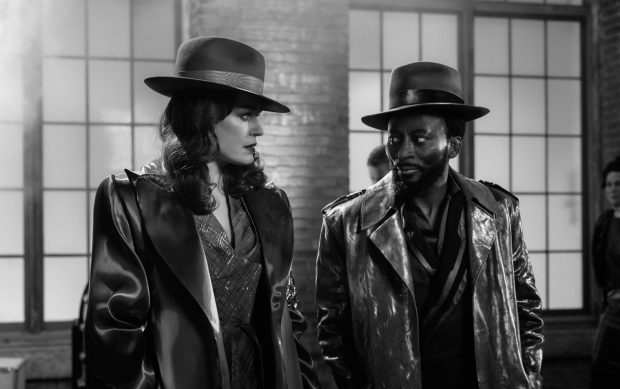
Occasionally when exploring the wonders of deep space, our heroes of Trek have been summoned to - or by sheer accident - become another person to fulfil their mission. Whether it's O'Brien mixing with gangsters or Picard becoming a mercenary, Star Trek's filled with episodes where our favourite explorers have to become someone else to save the day.... FACE OF THE ENEMY The Next Generation Season 6 Waking up on the Warbird Khazara, Deanna Troi finds herself in a bit of a pickle. Kidnapped and surgically altered to take the place of a Tal Shiar Commander she finds herself led by her handler, N'Vek, to lead a secret mission after the Commander had been killed. Out of her comfort zone, Troi has to convince the crew she's the real deal despite the ships skipper knowing something's not quite right.... In […]
A Fistful of Down To Earth Adventures
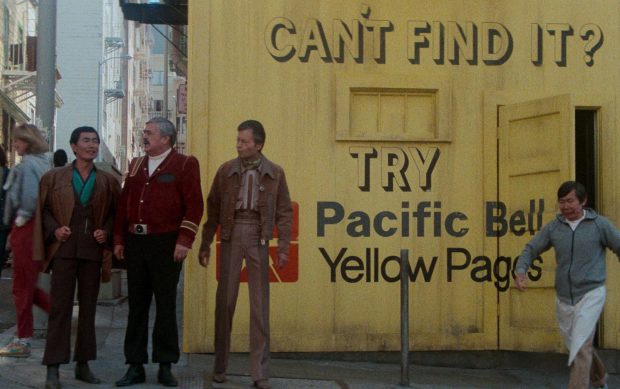
Warping through the stars always searching for the next adventure, it's rare that Star Trek ever comes home to Earth. Through all the series, and highlighted in Enterprise, the third rock from our sun is kinda important in the grand scheme of things but our eyes are always far beyond the stars. So for no particular reason at all - certainly not any recent new series launching - we're taking a look at Trek's more Earthbound moments.... Homefront/Paradise Lost Deep Space Nine Season 4 The Founders said they were everywhere. Now we know they're on Earth. Recordings revealed a founder during the bombing of a Federation meeting on the home-world and Sisko is recalled. His knowledge and experience with the Dominion is vital to securing Earth against the inevitable war. But while the Dominion may be the enemy, they aren't […]
A Fistful of ‘Spirk’
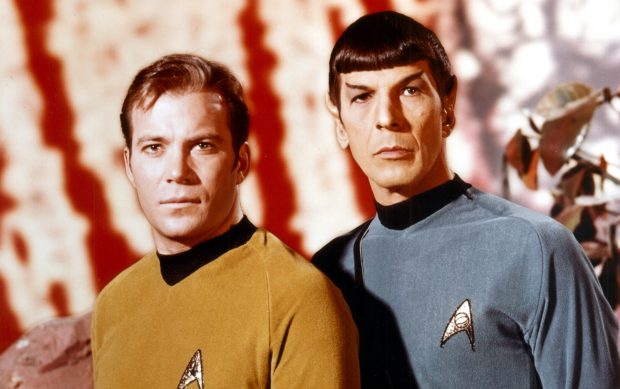
We've been spoiled with Spock in the past few years with Discovery introducing a younger iteration of the character long before he became the refined man of logic that made him famous, and continued that story through Strange New Worlds and his time under Captain Pike's command. As Strange New Worlds continues, giving more history to the original series line up and the early meetings of Spock and Kirk as it makes way for the beginning of the Kirk era, we thought we'd look back at some moments that made the partnership one of the most popular combinations in science fiction. JOURNEY TO BABEL TOS Season 2 Spock's got a bit of an issue with sharing. Secret brother who was shunned. Secret sister who's fate was classified. And despite trusting the Enterprise crew with his life, it was clearly only […]

A Fistful of O’Brien
Entering the Star Trek world as an unnamed extra with a few bits of dialogue, O'Brien soon became a fixture on the Enterprise D as it's transporter chief before moving to Deep Space Nine to head up engineering and operations on what was thought to be a backwater outpost before it became one of the most strategically important stations in the quadrant!As the only enlisted or non commissioned officer to feature in the main cast of any Star Trek show to date, O'Brien stands as the only working class hero in the Star Trek universe with a vast and varied career taking from the front lines of the Cardassian war as a soldier, to the front lines of the Dominion War as an engineer, retrofitting DS9, keeping the Defiant from blowing itself apart, and even sniping Dominion troops. All in […]

A Fistful of Justice
Although it's one of the worlds most legendary science fiction shows, Star Trek has always dabbled with format and genre's, all dressed up behind deep space adventures. Whether using the holodeck for a touch of fantasy, or diving into the horrors of war through Deep Space Nine's run, the variety of story telling never seems to fit one mould. But out of all the different tales told in the wonderful world of Starfleet, one that always promises to deliver is the court room drama. This month we're diving into the most captivating of Star Trek's courtroom drama's with a Fistful of Justice! AD ASTRA PER ASPERA Strange New Worlds, Season 2 One of the most modern examples of Strar Trek's court room drama saw Pike's own Number One, Una-Chin Reilly, under court martial for a serious breach of Starfleet regulation […]

A Fistful of Sisko
In the past few years, Star Trek has made several nods to it's past. But while The NExt Generation and Voyager had their continuations, Deep Space Nine continued to 'black sheep' of the family with it's history and name drops being few and far between. Until Academy when we had an entire episode based around the legend of Starfleet's most complex captains. Starting his show as a widower and single parent, Benjamin Sisko started his time in Star Trek as a reluctant hero turned religious icon who's become a prime figure in Bajoran history, the Federation-Dominion war and much more. If you missed his series, first of.... why?! And also, if you want a quick intro - here's our Sisko top five to see what the fuss is all about. https://www.youtube.com/watch?v=SzBkvzPoofQ IN THE PALE MOONLIGHT Season 6, Episode 13 Lets […]

