


One of the most long serving and influential visual architects of the Star Trek universe, Robert Blackman became part of the Star Trek franchise during the Next Generations second season as lead costume designer. Responsible for re-shaping Starfleets style, his work and influence was a vital parts of shaping the look of an entire era.

Blackman’s introduction to the Star Trek Universe had an awkward start. Having a background in theatre and film, he was already committed to another show as it’s costume designer when the Star Trek office began courting his services. The Next Generation was in it’s second season and already had a defined look, but it wasn’t quite right. Not yet.
Accepting the contract with conditions – primarily by keeping his word and finishing his commitments elsewhere, his first task was to update the spandex jumpsuits of the Enterprise crew ahead of the third season. A seemingly small task to modify an existing piece. But that small task made a huge impact that would help not only define the Next Generation, but continue to Deep Space Nine and Voyager.
Refining the existing aesthetic developed by William Ware Thiess, Blackman kept the theme of the uniforms but updated them with cleaner lines, improved (and more comfortable) structure and created a clean silhouette that instantly redefined the more professional and mature image the TNG crew projected. As the franchise evolved, so did Blackman’s work. With Deep Space Nine, he helped usher in a dramatic shift toward darker colours, layered fabrics, and more utilitarian construction to give a ‘working mans’ vibe in contrast to the dressed up office workers of the Enterprise.
His work and influence extended beyond Starfleet dress code with his designs embedding themselves into the fabric of Star Trek. Deep Space Nine’s mixed crew and wider cultural setting allowed a wider showcase, from the more rough around the edges style of the emerging Bajoran Militia, to the hard and reptilian Cardassian Union giving an imposing presence, to the blend of civilian clothing from overseeing Jake Sisko’s multiple outfits to the unique and striking all business looks of the Ferengi.

Later in his Star Trek career, Blackman was able to redefine Starfleet once more by going back to it’s roots. While Deborah Everton led the redesign of the darker tones for Starfleet in First Contact, Blackman would take the styl;e of the fleet back to basics for prequel series Enterprise; focusing on heavier fabrics and a look that more closely mirrored present day astronauts as a step between the 21st and 23rd centuries.
After his long tenure as Star Trek’s principal costume designer through The Next Generation, Deep Space Nine, Voyager and Enterprise, Blackman moved on to other television projects. He worked on series such as Pushing Daisies, The Cape and Glee – the latter of which saw him working from the same office space he used during his Star Trek tenure. Though his most iconic and lasting work is undoubtedly from his time in the 24th century, which he see’s replicated faithfully by fans at conventions to this date.
Robert Blackman’s work is celebrated for blending futuristic imagination with functional realism. His costumes never overwhelmed the story; instead, they enhanced it, quietly reinforcing tone, status, and cultural identity. Decades later, the visual language of 1990s Star Trek remains deeply influential, and for many fans, that era’s look is inseparable from Robert Blackman’s enduring creative legacy.


About the author

A Fistful of Spooky Encounters
Since it's inception Star Trek hasn't just been a sci fi show, but a show that used it's science fiction setting to tell a variety of stories from a large pool of themes and styles. And since we're officially in 'Spooky Season' on the countdown to Halloween, why not take a look at some of Star Trek's best dives into darkness? EMPOK NOR DEEP SPACE NINE, SEASON 5 Deep Space Nine is falling apart and thanks to the war, O'Brien can't exactly ask the Cardassians for spare parts. But he has a plan. Along with Nog and Garak, O'Brien leads an engineering crew to another abandoned Cardassian station to salvage what they can. Only problem is... there's a reason it was abandoned... Possibly the most straight forward horror story in the series, Empok Nor was host to an experiment gone […]
Delta Quarter Promotions & Citations: September 2026
Throughout it’s entire existence SFC has grown, evolved and thrived due to the commitment and passion of our officers and crew. Keen members can make a huge difference within their unit or the fleet as a whole, and we like to ensure members are rewarded and recognised for all they bring to the organisation. Starting this year, we're opening every new period within the fleet celebrating those who have made an impact and engaged in being a positive influence in their unit or in Q2 overall. And while we're getting in a little bit earlier, we'd like to introduce our Delta Quarter awards. While promotion is one of the most visible awards available to members, one of the most vital are our commendations. Commendations are a formal recognition awarded to members of Quadrant 2 who have shown commendable service and […]
What If…. the Whales Were Never Extinct?
Fondly remembered as the lightest, more comedic entries in Star Trek's film offerings, The Voyage Home is the story of an alien probe coming to Earth to talk to it's whale pen pal, a little bit miffed that they've not had a letter in a while. In the 21st century, those pen pals – Humpback Whales – had been hunted to extinction. Meanwhile, Kirk and his disgraced crew were on the way home to stand trial and through some time warp shenanigans, take a stolen Bird of Prey back to the 20th century, kidnap some whales, and take them to the 23rd century to save the day. The charges against Kirk were a fairly big deal. Previously Kirk had stolen a soon to be retired Enterprise, went against orders and along with support from his long standing command crew barged […]
[Retro Review] The Doomsday Machine
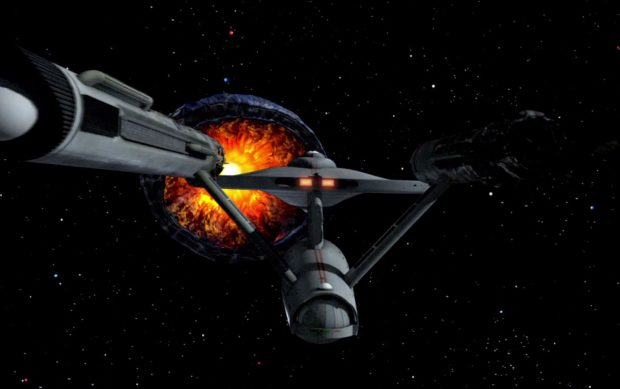
Responding to a distress call from the USS Constellation, the Enterprise race to the rescue but they arrive too late to save the day. Coming under fire from an alien entity, the Constellation has been heavily damaged and with only one survivor within it's charred shell; Commodore Matt Decker... Still in shock from the attack, Decker isn't able to say if it was an alien ship, or a creature that tore his ship apart. It doesn't take long to track the aliens flight path. It's not from around these parts, entering the Galaxy and on course towards populated areas that would undoubtedly be next in it's devastating path. Beaming on board with an away team, Kirk aims to try and get whats left of the ship back up and running while getting Decker to safety. But during the transit, the […]
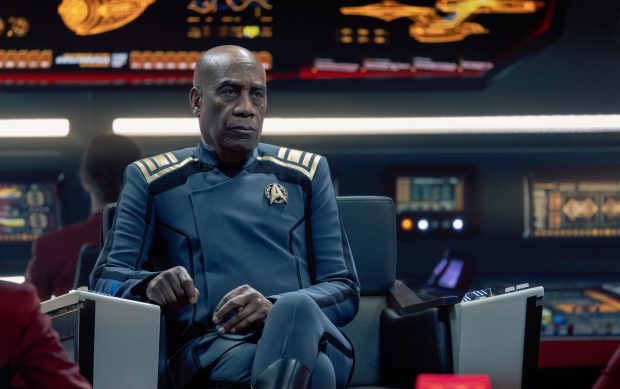
Under Pressure: ‘Orders Of Magnitude’, Strange New Worlds S4E08
Boarding as a hero and legend, Admiral Joe Reeger arrives, take command and leaves Pike stranded as he leads the remaining Enterprise crew on an urgent mission. With a visiting (again!) James Kirk picked out as first officer, Reegers mission and motivations come into question and puts Kirk's leadership to task... Writers: Alan B McElroy Director: Sharon Lewis One thing about season four that's been a highlight through some uneven episodes is how it's guiding it's characters form our first contact with them in this series, and how we originally met them sixty years earlier. While it's been more obvious with Spock's pivot towards being closer to his logical side, we've had Chapel make the choice to become a permanent part of the Enterprise and Scotty's move towards being the 'miracle worker'. Even Pike seems to be on the […]
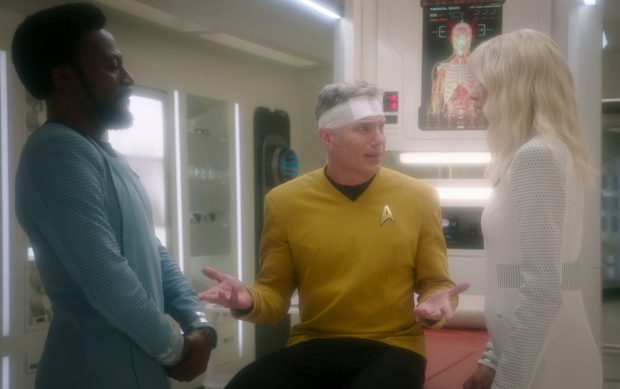
Days of Our Unreal Lives: ‘Like Chronitons Through The Hourglass’, Strange New Worlds S4E07
Waking up in sickbay with a comical bandage on his head following a shuttle accident, Pike quickly notices things are a bit off. The lights are too bright. The medical staff are behaving oddly with dramatic pauses aplenty. And he's fairly certain space madness isn't a genuine diagnosis. As the hour continues with devious secret siblings, dramatic feats of medicine and family drama aplenty, Pike is drawn further into the strangest of all worlds; the soap opera. Writers: Dana Horgan and Bill WolkoffDirector: Anna Dozoka Soap opera's are mental. And for a theme it's even more mental than it seems. But considering soap opera's are basically just overly dramatic premises with long lost relatives you'd never before heard of, absolutely insane scenario's that make Maggie Simpson shooting Mr Burns seem normal and plot twists so insane you genuinely have to […]
Related
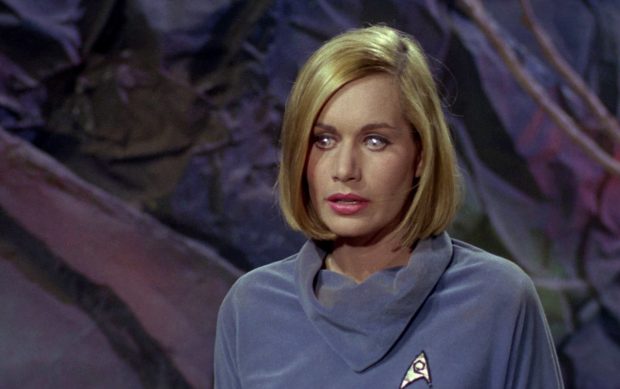
Them From That Thing: Sally Kellerman
Building an eclectic career with over sixty years in film, television, music and theatre, Sally Kellerman is fondly remembered by a whole generation as the original Hotlips Houlihan in the film adaption of MASH. Her part in the world of Star Trek helped introduce the world to the little sci fi show that began it's own franchise of entertainment. Starting her acting career in the late 50's after turning down a contract with Verve Records, Kellerman was a familiar face on television by the time Star Trek came around. With appearances on Bonanza, The Alfred Hitchcock Hour and the Twilight Zone among others, Kellerman was able to gain a wide range of experience that helped establish an adaptability that would carry her career forward in playing anything from a glamorous and sophisticated character, to intense and eccentric parts. Kellerman’s appearance […]
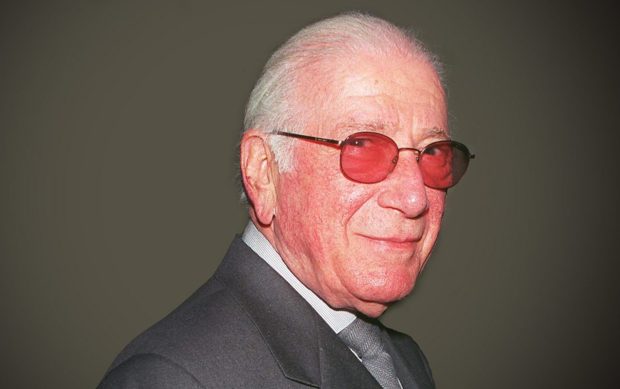
Behind the Viewscreen: Jerry Goldsmith
Across a long career writing music for some of Hollywoods most celebrated films, Jerry Goldsmith's mark can be heard in a huge range of genre's from The Omen, to LA Confidential, from Patton to Planet of the Apes. But even when it comes to his science fiction scores including Alien and Total Recall, none have left as iconic a mark as his contributions to Star Trek. During the reinvention of Star Trek for cinema, director Robert Wise knew the challenge. Turn a small sci fi show into a cinematic epic. The success of that has often came up for debate, but no matter the opinion on the Motion Picture, the one celebrated element was the music Goldsmith delivered and the new template he build for the sound of Star Trek. Blending classic orchestra with electronic synthesizers and complex rhythmic patterns, […]

Inside Trek/Outside Trek: Colm Meaney
To the entire Star Trek Universe, Colm Meaney will forever be remembered as The Chief. Making his first appearance in The Next Generations pilot as a background character, Meaney soon found himself in the rotating guest cast for the Next Generation as the character O'Brien was fleshed out and used to bridge the next spin off when he became part of the core cast of Deep Space Nine. Becoming a favourite as the mild mannered transporter chief, O'Brien solidified his place in Star Trek history in Deep Space Nine thanks to Meaney bringing a grounded, working-class style into the collection of officers and diplomats around him, kicking and cursing at broken down equipment in DS9's pilot episode and continuing to bring the most human character as a father, husband, mentor and overworked fixer of all things. Beyond Star Trek, […]

That Guy From That Thing: Harris Yulin
Among the many acclaimed guest appearances from all corners of the Star Trek Universe, there are only a small few who gave as deep a performance as Harris Yulin in his sole appearance in the franchise. Taking the spotlight as Aamin Marritza in Deep Space Nine's first season episode Duet, a Cardassian civilian who arrives at Deep Space Nine and raises a massive red flag for Kira when she learns he has a condition that links him to a brutal mining camp that many Bajorans suffered through during the occupation. Yulin is an actor who you may not recognise by name, but you always recognise. Having made his name in the New York theatre scene in the 60's, he quickly established himself as a serious dramatic talent with an incredible command of language, subtly and presence before he'd ever step […]

[Inside Trek] Behind the Viewscreen: Robert H Justman
It takes an army to bring a TV show to life, especially one creating it's own world to explore in and more often than not the people behind the scenes are often unsung heroes despite being key to the creation of an iconic a legacy as Star Trek. Robert Justman was one of the many responsible to shaping the Star Trek Universe, particularly in it's early days, and was one of the most influential producers in helping form the original series. Staring his career in technical and production roles, Justman learned the ropes in the 1950's as television in the US would go from a rare luxury to a household staple throughout the decade. Building his skills and reputation as assistant director and production manager on a variety of styles, Justman gained a reputation for being highly unorganised and keeping […]

Inside Trek/Outside Trek: Robert Picardo
The Doctor was a character designed as a stop-gap, a temporary solution in a crisis who would end up developing beyond his limited programming to serve as the only doctor on board the USS Voyager for it's seven years lost in the Delta Quadrant. It seems fitting that the man behind the emitter, Robert Picardo, has since become a larger part of the Star Trek Universe than he ever thought he'd be. Now starring as a main feature on Starfleet Academy, his second live action role, Picardo's Doctor was also a prominent part of both seasons of Star Trek Prodigy and has even man aged to squeeze in appearances as another EMH on board the Enterprise E in First Contact, and as holographic engineer Lewis Zimmerman in Deep Space Nine as well as bringing the character to expanded media including […]

