


One of Deep Space Nine’s biggest strengths was it’s incredibly diverse cast of characters, from Starfleet heroes and freedom fighters, to Cardassian spies and the ever devious Dominion. The series was spoiled for the level of skill and talent involved. Especially when it came to one small recurring part who became one of the most unforgettable villians of the series brought to life by Academy Award–winner Louise Fletcher.

Known to most of the world as Nurse Ratched, the tormentor of Jack Nicholson in One Flew Over the Cuckoo’s Nest, Fletcher was only the third woman to win an Academy Award for her cold and heartless performance. Gaining immense respect and stardom for her performance, by the time she arrived in the Star Trek Universe, Fletchers reputation for playing complex and calm authority figures made her a star before she even set foot on the promenade.
Her first appearance on the show set the tone. As Bajor sought out a new religious leader, Winn positioned herself as a defender of faith against the Federations more open policies as interference to Bajoran faith. While decrying the outsider interference in a clearly political role , Fletcher never approached it with the anger or hysterics of modern day politics. But with a composed softness that masked her arrogance with a harsh empathy not to be argued with.
One of Fletcher’s greatest strengths as an actress was her restraint. She didn’t need to shout to dominate a scene. A slight narrowing of the eyes, a gentle pause or the faintest curl of a smile was enough to signal that something dangerous lay beneath the surface. Her dynamic with Nana Visitor’s Major Kira Nerys – a former resistance fighter with deep spiritual conviction – should have been Winn’s natural ally. Instead, Fletcher crafted Winn as someone who weaponised her faith for power to the point most wouldn’t see her as a religious figure, merely another politician using what they can for control.
The brilliance of Fletcher’s performance was that Winn never saw herself as the villain. In her mind, she was chosen, righteous, and divinely guided. Even when she made morally dubious decisions, Fletcher played her as a woman seeking validation from the Prophets and struggling with feelings of spiritual abandonment. A facet played so well that it became part of the story, showing her envy and resentment that her faith, not her admittedly heroics sacrifices, weren’t enough.
Unlike many of Star Trek baddies, Winn didn’t command fleets or wield advanced technology. Her power was institutional. Political and spiritual. Fletcher understood that power like this was always best heard with a lower voice. She portrayed Winn as someone perpetually balancing insecurity with ambition, forever resentful that the Prophets spoke to Sisko but never to her. As Winn’s desperation for divine affirmation grew, Fletcher subtly peeled back the layers of composure to reveal bitterness and doubt.
Throughout her years on Deep Space Nine, Louise Fletcher’s Kai Winn stands as one of Star Treks most formidable antagonists and one of its most layered. In a franchise known for strong women, from Uhura to Janeway to DS9’s own Kira Nerys, Winn carved out a different space; a woman whose strength was rooted in influence and ideology rather than heroism. She reminded us that power can wear a gentle face. That conviction can become corruption. And that sometimes the most dangerous words in the galaxy are spoken softly.
Louise Fletcher passed away in 2022, but her contribution to the Star Trek Universe endures. Kai Winn remains a character fans love to hate, a testament to Fletcher’s extraordinary talent. Few actors can create a villain so maddening, so believable, and so painfully human.
In the vast universe of Star Trek, filled with gods, aliens, and cosmic phenomena, Louise Fletcher gave us something even more compelling, someone who wanted to believe she was chosen and more dangerous that she was not.


About the author
[Q2&A] The Quadrants of Command
Quadrant 2 is free for anyone in the UK, EU (and more!) to join. With a solid base in the UK, we have members from around a dozen other countries including units in France and Japan. One query we often get in our inbox is why don't we include the countries that have produced Star Trek – the United States and Canada? The answer is simple. We don't host those members. Quadrant 1 does. Starfleet Command Quadrant 2. It's quite the mouthful. If you're a curious fan wandering by wondering why we opted for a club name that had that many syllable, it comes down to our history and how SFC formed and evolved over the years. Originating in 1974, Starfleet Command began in the United States, an idea by fans that quickly gained the support of creator Gene Roddenberry […]
[Retro Review] Dagger Of The Mind
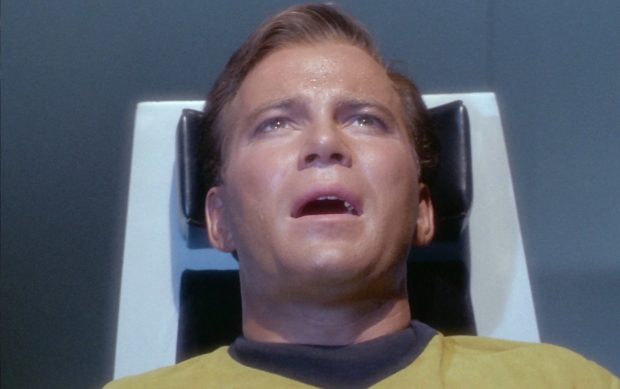
Dropping by a penal colony focused on rehabilitating the criminally insane, the Enterprise beams down some much needed supplies while one of the inmates sneaks on board to beg for asylum. But it's no regular stowaway. Dr Simon Van Gelder used to be part of the staff before he began to lose his mind and he's not just afraid of having dodgy meals and no windows, but reveals to Kirk that the facility runs through torture and abuse. Van Gelder arrived broken. His memories scattered, and any glimpse of those memories would trigger a painful and violent reaction. The colony's lead scientist and essentially warden, Dr Tristan Adams, waves it off claiming Van Gelder's techniques were tested on himself and that the rest of his story was delusional ramblings. Not entirely convinced, and given a heavy nudge by McCoy, Kirk […]
[Treknology] Shields Up! Red Alert!
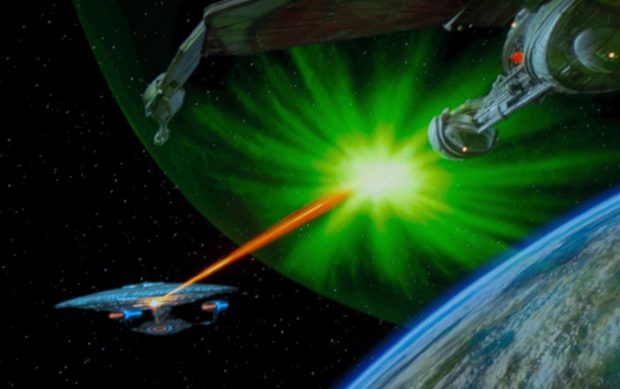
Different writers, directors and plot points paint Starfleet as multiple and occasionally conflicting things. Both a military and exploratory force, there's many layers to the fleet and how it operates. Handling everything from border defence to mapping unknown territories, even the most mundane mission in peace time can be a risky one. Especially as not every new person you meet will want a cup of tea and a chat, and accidentally dropping into someone's back garden doesn't always go down well.So when the shooting starts, you have to be ready to defend yourself, and in a world of weaponry that could burn an entire planet into ashes, sticking some armour on your hull just isn't going to cut it. One of the most vital systems always ready on stand by, deflector shields help to keep a ship and it's crew […]
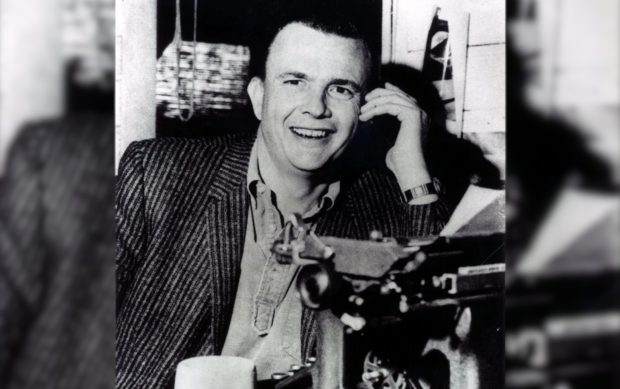
Behind the Viewscreen: Gene L Coon
As it's creator, the name Gene Roddenberry is part of the Star Trek legend. But when it came to shaping what the show was, and forming it's foundations, there was another Gene behind the scenes who help build on and refine the shows concepts into the world we know today. Originally brought into the fold in August 1966, Coon was hired to handle day to day production and script revisions during the shows first season, with his first credit appearing on the first seasons eighth episode, Miri. Beyond that day to day production, as well as his creative relationship with Roddenberry, Coon's efforts would help shape the shows identity, helping to form it's unique blend of science fiction, drama and political commentary and in shaping the shows moral compass that would be a keystone of the Star Trek experience. Giving […]

Across The Universe: A Trio of Spocks, 60th Anniversary Goodies and More!
Celebrating 60 years of Star Trek, our September News recap spotlights new goodies for fans to mark the landmark year, new missions for STO fans, and more! Spocktember in Star Trek Online Long running MMO Star Trek Online joined in the anniversary fun by bringing back a legendary character to their September release. On it's original launch STO utilised the vocal talents of Leonard Nimoy as he introduced players to the wider galaxy. In the latest release, archived dialogue from Nimoy has been used to bring Spock back into the new ongoing story.https://youtu.be/Da9UohgplIg?si=pAtm5D1bTSIXxREOAlongside Piotr Michael, who voiced Spock in Star Trek Resurgence, adding new lines as his version of Spock, and introducing Strange New Worlds star Ethan Peck in his own version of the character, all three era's of the iconic Vulcan come together thanks to the Guardian of Forever. […]
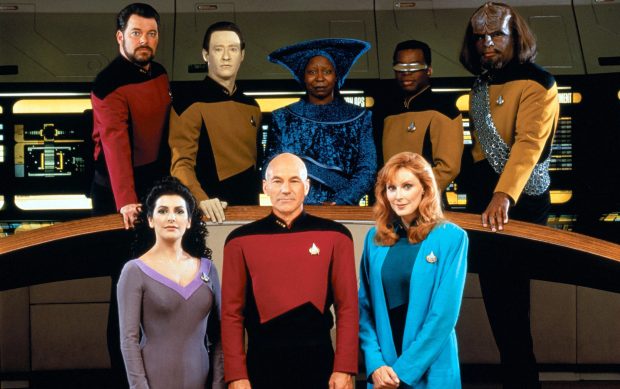
[For The Uniform] Generational Upgrade: 2350’s-2370’s
After solidifying a formal military style with stiff dark reds and heavy duty fabrics through the latter half of the 23rd century, the 'Monster Maroons' defined Starfleet as a more serious, more robust organisation. With minor tweaks the look stayed strong for almost 80 years when suddenly Starfleet decided they needed a dramatic change. It's not uncommon. Starfleet goes through uniforms faster, and in more rapid evolutions than any other organisation in history.Maybe it's because of the constant evolution of the Federation? Bringing in new members, new styles, new sensibilities and adapting to their needs. Maybe the MonsterMaroonians joined the Federation and would only absorb their navies into Starfleet if they adapted to their style, and it took eighty years for another species to come in and make fashion related demands. Maybe a new Admiral became Commander in Chief and […]
Related
Behind the Viewscreen: Gene L Coon
As it's creator, the name Gene Roddenberry is part of the Star Trek legend. But when it came to shaping what the show was, and forming it's foundations, there was another Gene behind the scenes who help build on and refine the shows concepts into the world we know today. Originally brought into the fold in August 1966, Coon was hired to handle day to day production and script revisions during the shows first season, with his first credit appearing on the first seasons eighth episode, Miri. Beyond that day to day production, as well as his creative relationship with Roddenberry, Coon's efforts would help shape the shows identity, helping to form it's unique blend of science fiction, drama and political commentary and in shaping the shows moral compass that would be a keystone of the Star Trek experience. Giving […]
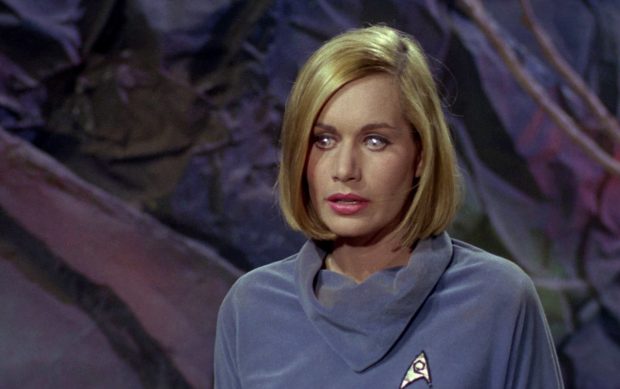
Them From That Thing: Sally Kellerman
Building an eclectic career with over sixty years in film, television, music and theatre, Sally Kellerman is fondly remembered by a whole generation as the original Hotlips Houlihan in the film adaption of MASH. Her part in the world of Star Trek helped introduce the world to the little sci fi show that began it's own franchise of entertainment. Starting her acting career in the late 50's after turning down a contract with Verve Records, Kellerman was a familiar face on television by the time Star Trek came around. With appearances on Bonanza, The Alfred Hitchcock Hour and the Twilight Zone among others, Kellerman was able to gain a wide range of experience that helped establish an adaptability that would carry her career forward in playing anything from a glamorous and sophisticated character, to intense and eccentric parts. Kellerman’s appearance […]
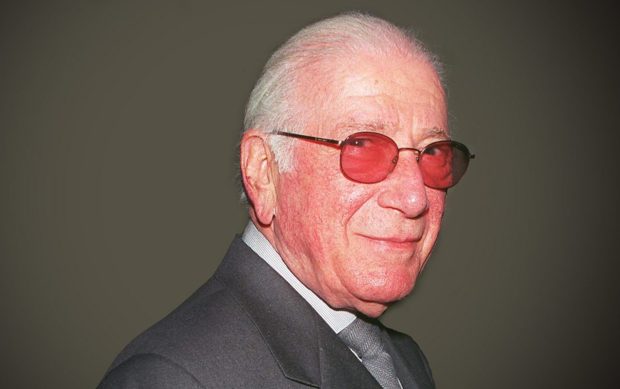
Behind the Viewscreen: Jerry Goldsmith
Across a long career writing music for some of Hollywoods most celebrated films, Jerry Goldsmith's mark can be heard in a huge range of genre's from The Omen, to LA Confidential, from Patton to Planet of the Apes. But even when it comes to his science fiction scores including Alien and Total Recall, none have left as iconic a mark as his contributions to Star Trek. During the reinvention of Star Trek for cinema, director Robert Wise knew the challenge. Turn a small sci fi show into a cinematic epic. The success of that has often came up for debate, but no matter the opinion on the Motion Picture, the one celebrated element was the music Goldsmith delivered and the new template he build for the sound of Star Trek. Blending classic orchestra with electronic synthesizers and complex rhythmic patterns, […]

Inside Trek/Outside Trek: Colm Meaney
To the entire Star Trek Universe, Colm Meaney will forever be remembered as The Chief. Making his first appearance in The Next Generations pilot as a background character, Meaney soon found himself in the rotating guest cast for the Next Generation as the character O'Brien was fleshed out and used to bridge the next spin off when he became part of the core cast of Deep Space Nine. Becoming a favourite as the mild mannered transporter chief, O'Brien solidified his place in Star Trek history in Deep Space Nine thanks to Meaney bringing a grounded, working-class style into the collection of officers and diplomats around him, kicking and cursing at broken down equipment in DS9's pilot episode and continuing to bring the most human character as a father, husband, mentor and overworked fixer of all things. Beyond Star Trek, […]

That Guy From That Thing: Harris Yulin
Among the many acclaimed guest appearances from all corners of the Star Trek Universe, there are only a small few who gave as deep a performance as Harris Yulin in his sole appearance in the franchise. Taking the spotlight as Aamin Marritza in Deep Space Nine's first season episode Duet, a Cardassian civilian who arrives at Deep Space Nine and raises a massive red flag for Kira when she learns he has a condition that links him to a brutal mining camp that many Bajorans suffered through during the occupation. Yulin is an actor who you may not recognise by name, but you always recognise. Having made his name in the New York theatre scene in the 60's, he quickly established himself as a serious dramatic talent with an incredible command of language, subtly and presence before he'd ever step […]

[Inside Trek] Behind the Viewscreen: Robert H Justman
It takes an army to bring a TV show to life, especially one creating it's own world to explore in and more often than not the people behind the scenes are often unsung heroes despite being key to the creation of an iconic a legacy as Star Trek. Robert Justman was one of the many responsible to shaping the Star Trek Universe, particularly in it's early days, and was one of the most influential producers in helping form the original series. Staring his career in technical and production roles, Justman learned the ropes in the 1950's as television in the US would go from a rare luxury to a household staple throughout the decade. Building his skills and reputation as assistant director and production manager on a variety of styles, Justman gained a reputation for being highly unorganised and keeping […]

