


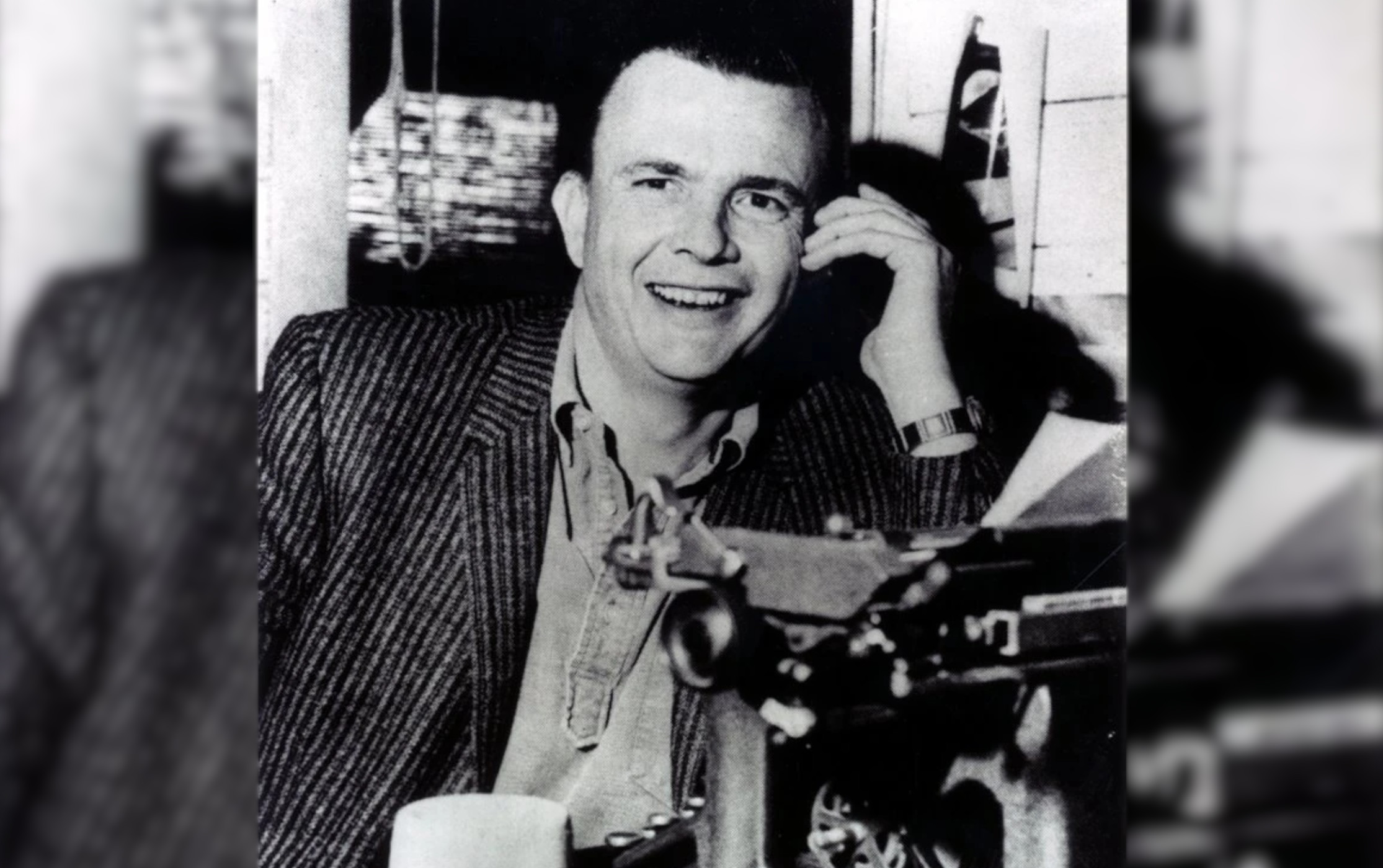
As it’s creator, the name Gene Roddenberry is part of the Star Trek legend. But when it came to shaping what the show was, and forming it’s foundations, there was another Gene behind the scenes who help build on and refine the shows concepts into the world we know today.
Originally brought into the fold in August 1966, Coon was hired to handle day to day production and script revisions during the shows first season, with his first credit appearing on the first seasons eighth episode, Miri. Beyond that day to day production, as well as his creative relationship with Roddenberry, Coon’s efforts would help shape the shows identity, helping to form it’s unique blend of science fiction, drama and political commentary and in shaping the shows moral compass that would be a keystone of the Star Trek experience.
Giving the show it’s cultural landscape, Coon’s most significant contributions were in how he expanded and mapped out the 23rd entry, from building up the Klingons as a majopr rival, and the cooperative framework of the United Federation of Planets to help shape how and why Starfleet operates. In building a more functional, and soon familiar world, his efforts gave a rich cultural landscape to help explore themes of diplomacy, peace, prejudice and the common thread of the responsibilities of immense power. His scripts would often use that base to challenge the audience’s ideas of good and evil, showing the world wasn’t quite as black and white as it seemed.
One of the best examples of his work was Errand of Mercy. Instead of introducing the Klingons as the stock villians, the baddies to be beaten, he used the hour to show our heroes shared the same flaws and weaknesses. As a contrast to presenting a complexity in it’s characters, he also helped inject a humour to help balance the ethical questions raised, helping to bring a humanity between the core trio of Kirk, McCoy and even Spock.
His work also reflected the social and political concerns of the 1960’s, an era marked by the Cold War, the civil rights movement and the Vietnam War. Using fictional concepts and hiding commentary under alien make up, he helped Star Trek to use fictional conflicts to examine contemporary issues. Turning those ideas into engaging and accessible television drama, his focus was not on technological advancement or showcasing the fantastic nature of it’s space faring setting, but bringing a more grounded core showcasing wisdom, cooperation and finding a common understanding.
Coon’s collaborative approach to storytelling was another important aspect of his legacy. As a producer and writer, he helped shape scripts, refine story ideas and maintain the series’ distinctive tone. His ability to combine philosophical questions with fast paced plots made complex themes understandable to a wider audience beyond science fiction fans.
Although Gene Coon left Star Trek during its second season, his creative influence continued to resonate throughout the franchise as it grew. His ability to combine imaginative storytelling with thoughtful social commentary helped establish the foundations that Star Trek would build on as it moved to cinema, and expanded to it’s Next Generation and beyond.
Though his time within the Star Trek world was short, his contributions were lasting as a key architect in driving it’s continuing mission.

About the author
Behind the Viewscreen: Gene L Coon
As it's creator, the name Gene Roddenberry is part of the Star Trek legend. But when it came to shaping what the show was, and forming it's foundations, there was another Gene behind the scenes who help build on and refine the shows concepts into the world we know today. Originally brought into the fold in August 1966, Coon was hired to handle day to day production and script revisions during the shows first season, with his first credit appearing on the first seasons eighth episode, Miri. Beyond that day to day production, as well as his creative relationship with Roddenberry, Coon's efforts would help shape the shows identity, helping to form it's unique blend of science fiction, drama and political commentary and in shaping the shows moral compass that would be a keystone of the Star Trek experience. Giving […]
Across The Universe: A Trio of Spocks, 60th Anniversary Goodies and More!
Celebrating 60 years of Star Trek, our September News recap spotlights new goodies for fans to mark the landmark year, new missions for STO fans, and more! Spocktember in Star Trek Online Long running MMO Star Trek Online joined in the anniversary fun by bringing back a legendary character to their September release. On it's original launch STO utilised the vocal talents of Leonard Nimoy as he introduced players to the wider galaxy. In the latest release, archived dialogue from Nimoy has been used to bring Spock back into the new ongoing story.https://youtu.be/Da9UohgplIg?si=pAtm5D1bTSIXxREOAlongside Piotr Michael, who voiced Spock in Star Trek Resurgence, adding new lines as his version of Spock, and introducing Strange New Worlds star Ethan Peck in his own version of the character, all three era's of the iconic Vulcan come together thanks to the Guardian of Forever. […]
[For The Uniform] Generational Upgrade: 2350’s-2370’s
After solidifying a formal military style with stiff dark reds and heavy duty fabrics through the latter half of the 23rd century, the 'Monster Maroons' defined Starfleet as a more serious, more robust organisation. With minor tweaks the look stayed strong for almost 80 years when suddenly Starfleet decided they needed a dramatic change. It's not uncommon. Starfleet goes through uniforms faster, and in more rapid evolutions than any other organisation in history.Maybe it's because of the constant evolution of the Federation? Bringing in new members, new styles, new sensibilities and adapting to their needs. Maybe the MonsterMaroonians joined the Federation and would only absorb their navies into Starfleet if they adapted to their style, and it took eighty years for another species to come in and make fashion related demands. Maybe a new Admiral became Commander in Chief and […]
[Treknology] Clearing The Way: The Deflector
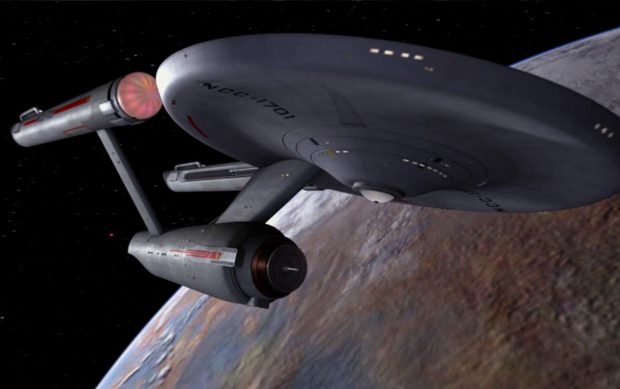
Over the decades the technologies of Star Trek have become so popularised and well known that even someone who's never seen an episode knows what a phaser is, or that warp drive goes really, really fast. Even if someone couldn't tell you what a transporter does, “Beam Me Up” is still a phrase you can say and people will just know what it means.But when you look at ships like the Enterprise, there's one big feature built into every design since that might not be as well known as the saucer, the bridge or the glowing warp nacelles, but is one of the most vital parts of any and all starships flying from planet to planet. When you think of space, you imagine this big empty void of nothingness. But while there is a huge expanse of distance between locations […]
Them From That Thing: Sally Kellerman
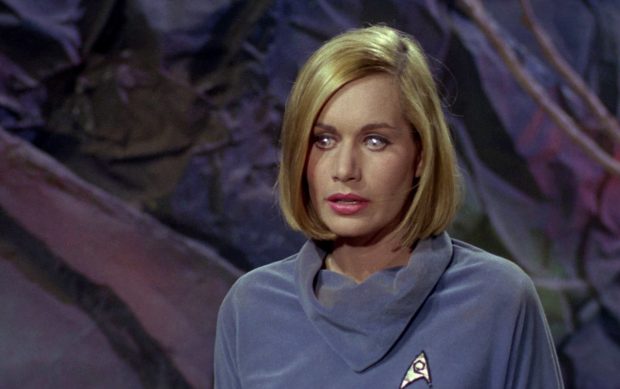
Building an eclectic career with over sixty years in film, television, music and theatre, Sally Kellerman is fondly remembered by a whole generation as the original Hotlips Houlihan in the film adaption of MASH. Her part in the world of Star Trek helped introduce the world to the little sci fi show that began it's own franchise of entertainment. Starting her acting career in the late 50's after turning down a contract with Verve Records, Kellerman was a familiar face on television by the time Star Trek came around. With appearances on Bonanza, The Alfred Hitchcock Hour and the Twilight Zone among others, Kellerman was able to gain a wide range of experience that helped establish an adaptability that would carry her career forward in playing anything from a glamorous and sophisticated character, to intense and eccentric parts. Kellerman’s appearance […]
Who is David Marcus?
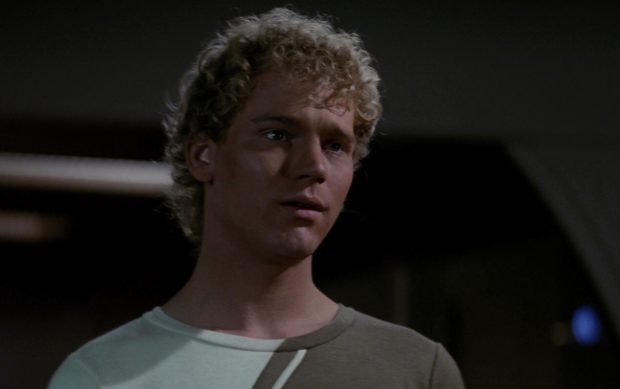
While the original series brought the idea of Star Trek to life, it's film sequels did a lot to flesh out and develop the characters in the next era of their life, with new characters coming on board the Enterprise to both challenge the leading crew and give us a new perspective of the world saving heroes of the Federation. One of the most impactful appeared in only two of the six films, but left a lasting impression on Captain James T Kirk... Working with his mother Carol, David Marcus was one of the lead scientists on the Genesis project. Based on a remote space station, David's part in the project was both what helped it succeed, as well as cause it's downfall. Genesis was an experimental, and highly secret, project to terraform barren planets and manufacture life. While Starfleet […]
Related
Them From That Thing: Sally Kellerman
Building an eclectic career with over sixty years in film, television, music and theatre, Sally Kellerman is fondly remembered by a whole generation as the original Hotlips Houlihan in the film adaption of MASH. Her part in the world of Star Trek helped introduce the world to the little sci fi show that began it's own franchise of entertainment. Starting her acting career in the late 50's after turning down a contract with Verve Records, Kellerman was a familiar face on television by the time Star Trek came around. With appearances on Bonanza, The Alfred Hitchcock Hour and the Twilight Zone among others, Kellerman was able to gain a wide range of experience that helped establish an adaptability that would carry her career forward in playing anything from a glamorous and sophisticated character, to intense and eccentric parts. Kellerman’s appearance […]
Behind the Viewscreen: Jerry Goldsmith
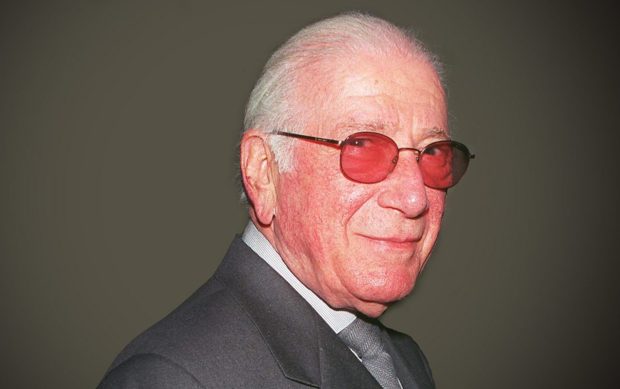
Across a long career writing music for some of Hollywoods most celebrated films, Jerry Goldsmith's mark can be heard in a huge range of genre's from The Omen, to LA Confidential, from Patton to Planet of the Apes. But even when it comes to his science fiction scores including Alien and Total Recall, none have left as iconic a mark as his contributions to Star Trek. During the reinvention of Star Trek for cinema, director Robert Wise knew the challenge. Turn a small sci fi show into a cinematic epic. The success of that has often came up for debate, but no matter the opinion on the Motion Picture, the one celebrated element was the music Goldsmith delivered and the new template he build for the sound of Star Trek. Blending classic orchestra with electronic synthesizers and complex rhythmic patterns, […]

Inside Trek/Outside Trek: Colm Meaney
To the entire Star Trek Universe, Colm Meaney will forever be remembered as The Chief. Making his first appearance in The Next Generations pilot as a background character, Meaney soon found himself in the rotating guest cast for the Next Generation as the character O'Brien was fleshed out and used to bridge the next spin off when he became part of the core cast of Deep Space Nine. Becoming a favourite as the mild mannered transporter chief, O'Brien solidified his place in Star Trek history in Deep Space Nine thanks to Meaney bringing a grounded, working-class style into the collection of officers and diplomats around him, kicking and cursing at broken down equipment in DS9's pilot episode and continuing to bring the most human character as a father, husband, mentor and overworked fixer of all things. Beyond Star Trek, […]

That Guy From That Thing: Harris Yulin
Among the many acclaimed guest appearances from all corners of the Star Trek Universe, there are only a small few who gave as deep a performance as Harris Yulin in his sole appearance in the franchise. Taking the spotlight as Aamin Marritza in Deep Space Nine's first season episode Duet, a Cardassian civilian who arrives at Deep Space Nine and raises a massive red flag for Kira when she learns he has a condition that links him to a brutal mining camp that many Bajorans suffered through during the occupation. Yulin is an actor who you may not recognise by name, but you always recognise. Having made his name in the New York theatre scene in the 60's, he quickly established himself as a serious dramatic talent with an incredible command of language, subtly and presence before he'd ever step […]

[Inside Trek] Behind the Viewscreen: Robert H Justman
It takes an army to bring a TV show to life, especially one creating it's own world to explore in and more often than not the people behind the scenes are often unsung heroes despite being key to the creation of an iconic a legacy as Star Trek. Robert Justman was one of the many responsible to shaping the Star Trek Universe, particularly in it's early days, and was one of the most influential producers in helping form the original series. Staring his career in technical and production roles, Justman learned the ropes in the 1950's as television in the US would go from a rare luxury to a household staple throughout the decade. Building his skills and reputation as assistant director and production manager on a variety of styles, Justman gained a reputation for being highly unorganised and keeping […]

Inside Trek/Outside Trek: Robert Picardo
The Doctor was a character designed as a stop-gap, a temporary solution in a crisis who would end up developing beyond his limited programming to serve as the only doctor on board the USS Voyager for it's seven years lost in the Delta Quadrant. It seems fitting that the man behind the emitter, Robert Picardo, has since become a larger part of the Star Trek Universe than he ever thought he'd be. Now starring as a main feature on Starfleet Academy, his second live action role, Picardo's Doctor was also a prominent part of both seasons of Star Trek Prodigy and has even man aged to squeeze in appearances as another EMH on board the Enterprise E in First Contact, and as holographic engineer Lewis Zimmerman in Deep Space Nine as well as bringing the character to expanded media including […]

